

Ever wonder how Argentina moved from wild inflation spikes to a steadier path? There was a time when prices leaped over 100%, shaking up the daily lives of many people. But thanks to smart reforms and tighter financial rules, the country is finally showing some steady signs of improvement.
Today, we’re going to explore Argentina’s bumpy inflation journey. You’ll see how past cycles rocked the economy and how hopeful changes are now taking shape. Let’s break down the ups and downs and take a closer look at what the future might hold for Argentina’s economy.
Argentina Inflation Rate: Evolution and Future Outlook
Argentina has faced many ups and downs over the years. Inflation has even soared past 100% during tough times. These spikes came as a result of policy mistakes and a rapid increase in the money supply. Imagine a market where prices race upward, leaving everyday costs out of control.
Recently, the picture has brightened a bit. In June 2025, the monthly inflation rate dropped to 1.6%, and the full-year rate reached 31.5%, the lowest in eight years.
Big changes in policy are now making a difference. President Milei has been working hard to fix public finances, slow down money supply growth, and clear up price distortions. The International Monetary Fund recently praised these efforts. On July 31, their Extended Fund Facility review backed a zero-overall deficit target and approved a $2 billion disbursement. Experts now expect inflation to continue its downward trend as confidence in the country’s economy starts to grow.
Tracing Argentina’s Inflation Rate Through the Decades
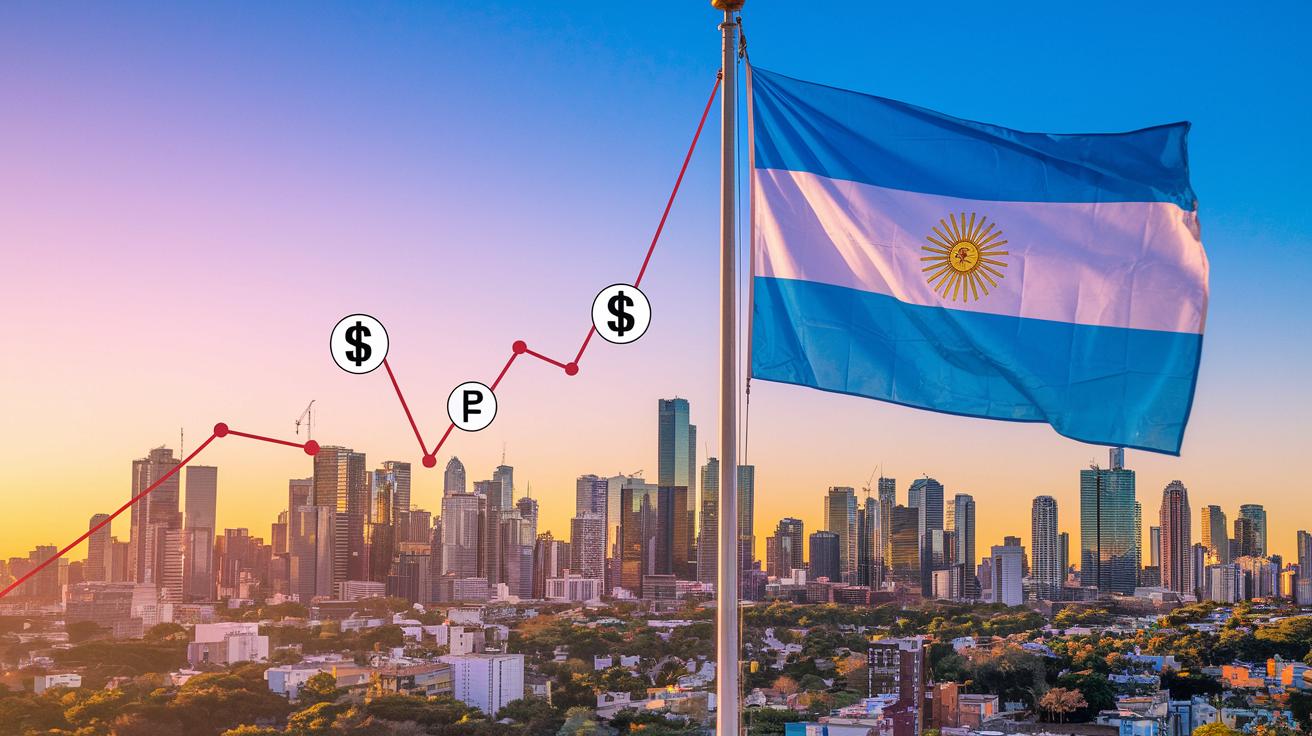
Argentina's inflation story is full of ups and downs, with sharp changes in rules along the way. Since the 1980s, poor budgeting and inflation-driven financing sent prices soaring, sometimes even over 100% during hyperinflation. In the 1990s, the economy took a steadier path, keeping price rises more in check. But in the 2000s and 2010s, inflation stayed high. Then from 2020 to 2023, prices shot up again until reforms finally brought the rate down to 31.5% in 2025.
| Time Frame | Inflation Range |
|---|---|
| 1980s | High volatility |
| 1990s | Moderate stabilization |
| 2000s | Moderate-high rates |
| 2010s | Persistent inflation |
| 2020–23 | Surge >100% |
| 2025 | Decline to 31.5% |
For help reading the inflation chart, check out "how to read an inflation graph."
This table clearly shows the ups and downs in Argentina's price changes. Each time period tells its own story, from wild swings in the early days to more stable times after tough policy changes. Recent reforms even hint at a brighter future. Have you ever wondered how quickly these changes impact everyday life? It all comes down to the mix of policy and economic pressure in play at the time.
Drivers of Argentina’s Inflation Rate: A Detailed Breakdown
Argentina’s rising prices come from a mix of market forces and government policy decisions that have shifted over the years. There are four main factors behind these trends, and understanding each one helps paint a clear picture of the situation.
Exchange Rate Depreciation
When Argentina’s currency loses value, it has a huge impact on inflation. Past policies like strict capital controls and large fiscal deficits weakened investor trust, causing the peso to drop. For instance, there was a time when the peso fell so fast that prices doubled in just a few weeks, leaving consumers uneasy about the local currency. External shocks only made things worse.
Fiscal Deficits and Public Finance
Poor public finance management has also fueled soaring prices. When the government borrows money or prints too much currency, inflation tends to rise. Experts often point out that unchecked deficits erode confidence both at home and abroad. This pattern has played a big role during Argentina’s most intense inflation periods.
Monetary Expansion
Another key factor is the rapid increase in the money supply, largely driven by central bank actions. When too much money enters the market, its value drops, and buying power shrinks, pushing up prices. This example shows how central bank policies can directly affect everyday costs.
Supply-Side Distortions
Government interventions such as price controls and subsidies can further complicate inflation. Sometimes these efforts backfire, leading to shortages in the market. And when supply becomes tight, prices can jump unexpectedly, adding another layer to the inflation problem.
Each of these points interacts to shape Argentina’s complex inflation picture. Balancing these factors is essential for creating more stable economic policies and setting the stage for a steadier fiscal future.
Impact of Government Reforms on Inflation Control

In July 2024, the IMF reviewed Argentina's Extended Fund Facility and gave a thumbs-up to its zero-deficit goal, releasing $2 billion in funds. This clear move showed that the world had confidence in Argentina's fiscal plans and called for a strict review of its financial measures. The government’s focus on smart public finance helped calm the markets and gave investors a boost.
The government didn’t waste any time. It cut old subsidies and got rid of special pricing rules that had skewed the market for too long. By taking away these barriers, they created a simpler and fairer system that helped slow down rising prices, easing the burden for both consumers and businesses.
These fiscal actions are starting to show real benefits. In 2025, GDP growth hit 5.5%, fueled by strong results in agribusiness, mining, and energy. Lower inflation has lifted investor confidence and spurred job creation, proving that solid reform can lead to economic recovery. It’s a clear sign that disciplined fiscal strategies are paving the way for stable growth and a promising future in Argentina’s battle against inflation.
Forecasting Argentina’s Inflation: Projections to 2025 and Beyond
Analysts and the IMF are cautiously optimistic about Argentina's economic turnaround. They expect the economy to pick up steam with disciplined fiscal and monetary policies smoothing out inflation. The IMF forecasts a 5.5% growth in GDP for 2025, and recent data showing a 1.6% monthly inflation rate in June hints that annual inflation could stay below 21% and might even fall under 20%.
Experts believe that better public finance management and clearer market rules are boosting investor confidence. These improvements are likely to ease inflationary pressures over time, setting the stage for a more stable and healthy economic environment.
| Year | Projected Annual Inflation Rate |
|---|---|
| 2025 | ~20% |
| 2026 | ~18% |
| 2027 | ~16% |
Inflation’s Impact on Argentina’s Key Economic Sectors

Agribusiness, mining, and energy are seeing real benefits as updated rules create a steadier space for investors. The government’s new policies have given both local and international backers more confidence, which has led to a healthy flow of investments into these areas. Lower inflation has further eased price swings, letting companies focus on long-term plans and business growth. For example, agribusiness firms are putting money into advanced harvesting tools, while energy and mining companies are upgrading their gear to boost output.
Manufacturing and service industries are also enjoying the lower inflation. With cost pressures easing, manufacturers can trim production expenses, and service providers can keep prices steady to hold customer demand. As inflation stays in check, these sectors are in a good position to invest in efficiency improvements and keep up with changing market trends.
Final Words
In the action, our article tracked Argentina’s inflation peaks alongside gradual rate reductions. It painted a picture of past fiscal struggles and current policy reforms, including measures to control money supply and ease price pressures. We broke down key drivers like exchange rate trends and fiscal discipline. The forecast section offered a promising look at future stabilization. Overall, the careful review of argentina inflation rate history and outlook leaves business professionals with clear, actionable insights to guide strategic decision-making.
FAQ
What does the Argentina inflation rate history graph show?
The Argentina inflation rate history graph shows past periods of rapid inflation, including times of hyperinflation and later declines. It highlights year-over-year changes and offers insight into policy effects from as early as 2022.
What does the Argentina inflation rate by month reveal?
The monthly inflation breakdown reveals short-term fluctuations, giving a clearer picture of how economic measures and market changes affect Argentina’s inflation within each month.
What future projections exist for Argentina’s inflation rate, including 2026?
Future projections indicate a move toward stabilization under disciplined fiscal policies. Analysts expect lower inflation in 2026 compared to recent peaks, reflecting gradual improvements in economic management.
How do President Milei’s reforms affect Argentina’s inflation?
President Milei’s reforms focus on fiscal balance and controlling money-supply growth, contributing to lower inflation. These policy changes aim to build economic stability and improve long-term financial conditions.
What does year-over-year (YoY) inflation data reveal for Argentina?
YoY inflation data reveals a slowdown from previous extreme spikes. This trend shows that recent fiscal adjustments are beginning to positively affect Argentina’s inflation trajectory.
How has Argentina’s inflation rate changed over the past five years?
Over the last five years, Argentina’s inflation rate shifted from highly volatile levels to a more moderate pace. This change reflects the impact of various fiscal reforms and efforts to stabilize the economy.