

Have you ever noticed that the market sometimes feels moody? Just like walking into a lively room, the market gives off hints when fear or hope is in charge. Traders keep an eye on these signals to decide when to buy or sell.
In this guide, you'll find simple tips for spotting these mood shifts using clear numbers and everyday chatter. Get ready to learn easy methods that can help you make smarter trading moves and stay ahead in the fast-paced market.
Core Methods to Quantify Market Sentiment
Market sentiment tells us how investors are feeling right now. When investors are confident and optimistic, prices tend to rise because they buy more. But when fear creeps in, selling spikes. It’s a bit like reading the room at a party, you sense the vibe and act accordingly.
Traders use a variety of tools to gauge these feelings. Some methods focus on numbers and charts, while others listen to what people are saying. Think of it like checking the weather: sometimes you look at a forecast (technical data) and sometimes you feel the air on your skin (survey insights). This mix of data helps traders decide when to buy or sell.
| Market Analysis Tool |
|---|
| Volatility Index (VIX) |
| Put/Call Ratio |
| Investor Sentiment Surveys |
| Price & Volume Analysis |
| Commitment of Traders Report |
| Social Media Sentiment Analytics |
Each of these tools adds a piece to the puzzle. For instance, a high VIX may suggest that many investors are nervous, while a rising put/call ratio often points to lots of hedging. Surveys capture what investors are saying in their own words, and real-time data from social media shows the mood as it shifts. Together, these insights help traders adjust their strategies, manage risk, and pinpoint when the market sentiment might be about to change.
Investor Surveys and Polling Methods for Sentiment Measurement

Investor surveys give us a clear look at market moods. Weekly polls like those from AAII show us the balance between bull and bear feelings. When more than half the investors are upbeat, it may signal that confidence is at its peak. On the other hand, figures under 30% often point to heightened nervousness. This simple method lets us capture real-time economic sentiment by recording actual investor behavior.
Data from sources such as Investor Intelligence also gives us useful clues. These surveys often follow the advice of newsletter editors, and a swing to extremes can hint that a reversal might be on the horizon. For example, if most investors appear overly optimistic, it might be wise to step back a bit. In a way, these surveys provide an immediate peek into market emotion and can balance out technical tools.
It’s a good idea to continuously compare survey results with trends seen in price movements and trading volumes. This blend of information helps pinpoint true market turning points instead of just temporary blips. Many traders rely on these insights to avoid making decisions based solely on technical signals, gaining a clearer view of the psychology behind the market. In short, using survey-based methods can sharpen your trading strategies and improve your market timing, as detailed in recent market sentiment research.
Technical Market Behavior Indicators for Sentiment Gauging
Technical tools break down investor actions into clear numbers that help us understand market feelings. They show trends that simple price charts might miss. For example, the VIX measures the S&P 500's expected ups and downs. When it goes above 30, traders often see this as a sign of fear and uncertainty. The Put/Call Ratio is another tool. It compares how many put options are traded versus call options. A ratio over 1.0 usually hints that traders are leaning towards a bearish outlook.
Other measures add valuable details. The TRIN, also known as the Arms Index, compares the number of stocks going up and down with their trading volumes. If it’s above 1.5, it might mean the market is oversold. Moreover, moving-average sentiment indicators average daily signals over 5 to 20 days. These averages smooth out day-to-day noise and help traders notice subtle shifts. Looking at historical trends in these sentiment measures gives additional context. Past data can signal extreme conditions that often lead to market reversals.
Each of these metrics forms a piece of the bigger picture. When technical analysis shows a steady pattern, it can help traders decide when to enter or exit the market.
| Indicator | What It Measures | Interpretation |
|---|---|---|
| VIX | S&P 500 Volatility | High = Widespread fear |
| Put/Call Ratio | Bearish vs. Bullish Option Activity | >1.0 suggests bearish sentiment |
| TRIN | Advancing/Declining Stocks vs. Volume | >1.5 indicates oversold conditions |
| Sentiment MA | Smoothed Sentiment Signal | Crossover signals a shift |
These core technical sentiment tools give clear, data-based snapshots of investor mood. When looked at together, they help traders spot market changes and make smarter entry or exit decisions.
Real-Time Social Media and AI-Based Sentiment Tracking Tools
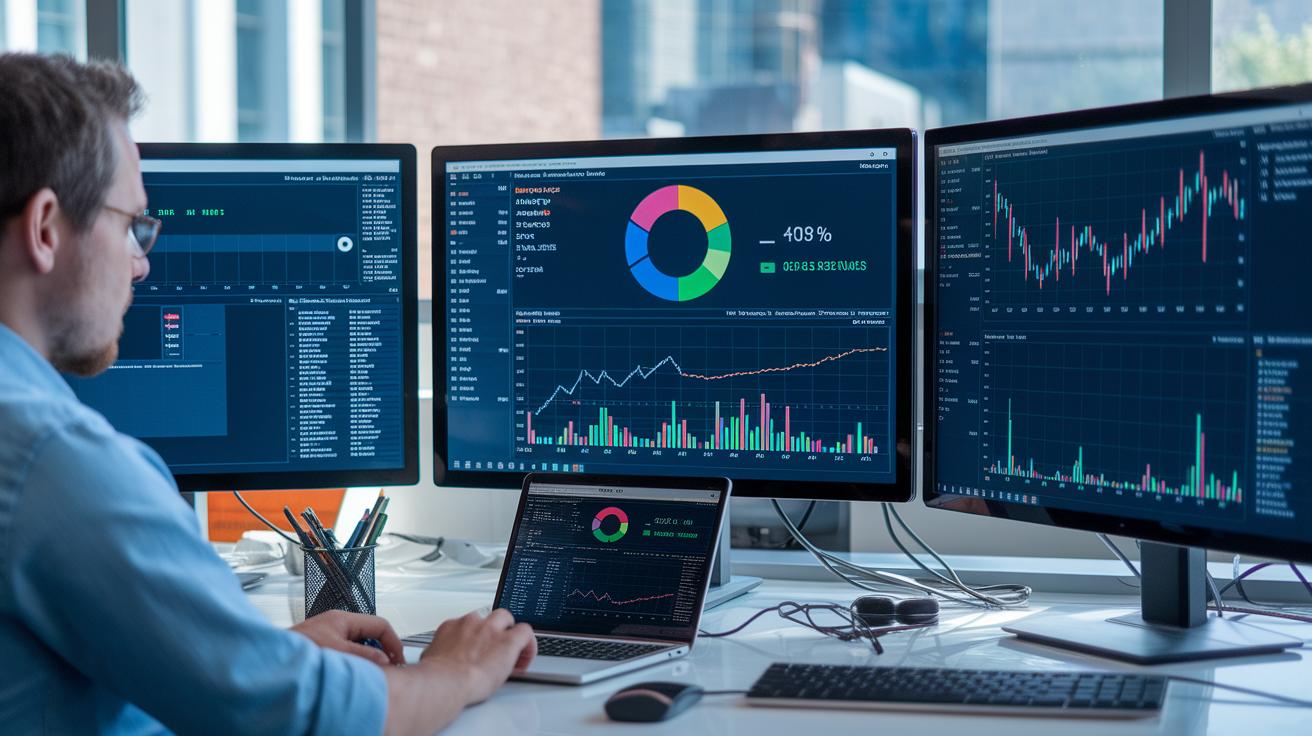
Modern tools like RavenPack and Sentifi scan social media and news headlines in real time using smart language technology. They pull in data from tweets, posts, and articles, then change common phrases into scores that capture the mood during key market events. For example, when words like "surge" or "panic" suddenly spike, it might be a quick sign that investors are changing their views.
These platforms also offer dashboards that display trending keywords, heat maps, and shifts between optimism and caution. Look for features like real-time visuals and clear filtering options to keep up with emerging language trends. Ever noticed how these dashboards update during big news events? They give you instant hints about how investors feel at that very moment.
Plus, many of these systems use AI that keeps learning with every update, adapting to new slang and market chatter. This means the sentiment scores stay accurate even as the language on social media changes. With automated sentiment tracking paired with easy-to-read visuals, traders can quickly spot market shifts and adjust their strategies on the fly.
Interpreting Combined Sentiment Signals for Market Forecasting
Weighting and Combining Indicators
Mixing various sentiment measures can give you a clearer market forecast. Imagine assigning past performance weights to survey data, technical charts, and even AI tools based on how well they predicted trends before. This technique builds a sentiment model that mirrors actual market moods. In doing so, traders can view the market in a smarter, more rounded way that combines both gut feelings and hard numbers.
Contrarian Signal Application
Extreme sentiment levels often hint at big turning points. When fear hits very high, like in the CNN Fear & Greed Index, it might mean the market is oversold, potentially signaling a reversal. On the flip side, sky-high optimism could suggest the market is overextended and might soon pull back. Think of it like noticing everyone is leaving a store during a wild sale, it could be the perfect moment to step in.
Trend Confirmation Techniques
Relying on just one indicator can lead to mistakes, so matching up signals from different timeframes is key. Traders often spot a sentiment change in daily charts and then check if it lines up with weekly trends. When both survey data and technical indicators agree, it boosts the forecast’s reliability. Backtesting these mixed signals against past market moves can add extra confidence and help smooth the transition into a trade.
Best Practices and Pitfalls in Market Sentiment Measurement

Cross-checking sentiment data with core market numbers really pays off. It’s a good idea to look at survey results, option trades, and price trends alongside earnings reports or key economic indicators. And don’t forget to backtest your models in different market conditions. This helps you see how your sentiment measures worked when the markets were on the move. You should also fine-tune your thresholds for market volatility. For example, if a technical signal screams “fear” during a typically high-volatility period, tweaking your thresholds could give you a truer read of market feelings.
- Combine various data sources to see the full picture
- Test how sentiment measures performed with past market data
- Adjust your thresholds to fit regular market fluctuations
On the flip side, using too many noisy or slow indicators can cause mistakes. You might fall into the trap of seeing only what you expect, and ignoring big changes until it’s too late. Remember, sentiment should be one piece of your overall trading strategy. It’s there to help you decide, not to make all the calls for you.
Final Words
In the action, we explored key strategies for quantifying market sentiment. We broke down methods such as survey analysis, technical indicators, and AI-powered social media tools that shape how to measure market sentiment effectively.
Each technique, from volatility indexes to investor surveys, provides its own snapshot of market moods. Together, these approaches help paint a clearer picture and empower smart, data-driven decisions. This integrated view leaves you ready to apply these insights with confidence and optimism.
FAQ
How to measure market sentiment forex
The measurement of forex market sentiment involves assessing technical data, tracking volatility, and reviewing trader positioning. This approach combines technical tools with social media analysis to capture the overall trading mood.
Market sentiment today
The market sentiment today mirrors prevailing investor feelings shaped by current news releases, economic reports, and social media trends, offering a snapshot of market optimism or caution.
How to measure market sentiment reddit
The measurement of market sentiment on Reddit is achieved by scanning popular posts, monitoring keyword trends, and using sentiment analysis tools to interpret investor emotions expressed in discussions.
Market sentiment indicators
The market sentiment indicators comprise tools such as volatility indexes, put/call ratios, investor surveys, and social media sentiment analytics, all of which collectively gauge the mood and outlook of investors.
How to measure market sentiment in stock market
The approach to measuring stock market sentiment combines technical analysis, investor surveys, and evaluation of price and volume behavior, offering insights into bullish or bearish market trends.
Market sentiment meaning
The market sentiment meaning reflects the overall attitude of investors, showing whether market participants are leaning toward optimism or caution, which in turn influences buying and selling decisions.
Market sentiment example
The market sentiment example is seen when bullish survey results drive stock prices upward, while sudden spikes in volatility indexes signal a shift toward fear and potential selling pressure.
Market sentiment indicator TradingView
The market sentiment indicator on TradingView gathers technical signals and social media data, providing real-time visual insights that help traders spot shifts in market mood quickly.
How to evaluate market sentiment?
The evaluation of market sentiment involves blending technical indicators with investor surveys and real-time news analysis to form a well-rounded view on whether market emotions lean toward bullishness or bearishness.
What are the best indicators for market sentiment?
The best indicators for market sentiment include the volatility index, put/call ratio, investor survey data, and social media sentiment scores, which together offer a balanced perspective on market mood.
What is the 3 5 7 rule in trading?
The 3 5 7 rule in trading uses different moving averages—short-term (3-day), mid-term (5-day), and longer-term (7-day)—to confirm trend strength and signal potential market entry or exit points.
How often does a 20% market correction happen?
The occurrence of a 20% market correction varies but is typically observed once every few years, as it depends on market volatility and external economic pressures.