

Ever wonder why some companies bounce back stronger after a setback? Risk management training gives you the knack to spot problems early before they get out of hand. Think of it like a captain steering through stormy seas, experts can detect issues before they grow.
In this article, you'll learn simple tools to understand and control risks, whether they come from everyday operations or broader plans. Get ready to pick up actionable steps that boost your skills and help your organization perform better.
Essential Overview of risk management training Programs
Risk management training gives professionals the tools they need to spot, study, and control risks that can affect their organizations. It explains the basics of strategic risks from long-term plans, day-to-day operational risks, and compliance risks tied to rules and regulations. And with updates as recent as December 15, 2025, this training is always current, giving risk managers, team leaders, and project managers the latest insights.
Think of it this way: one employee once said, "Before the training, I struggled to notice warning signals; now, I can spot potential issues before they grow." This real-life example shows how the training breaks down complex ideas into clear, actionable steps. It walks you through how to build effective action plans and create detailed risk reports that really make a difference.
The course dives into techniques for weighing the chance and impact of different risks. It’s very hands-on, with exercises designed to mirror everyday challenges. Whether you’re in a classroom, online for uncertainty oversight, or at a simulated enterprise threat workshop, you’ll get plenty of practice applying these strategies right when you need them.
In addition, the program’s real-world scenarios mean you’re not just learning theory, you’re ready to apply what you learn to manage both daily operations and long-term strategic hurdles. This mix of clear instructions, practical examples, and interactive exercises helps boost your professional skills and strengthens your organization’s ability to handle whatever comes its way.
risk management training Formats: In-Person, Online, and On-Demand Delivery

Risk management training is available in several delivery styles, each designed to help you sharpen your skills. In-person classes let you connect face-to-face, offering immediate feedback and lively workshops. Live online courses capture the energy of a classroom with real-time sessions you can join from anywhere. Meanwhile, on-demand modules let you study at your own pace, so you can fit training into your busy schedule. Digital platforms, including mobile-friendly options, keep teams updated by blending risk awareness into everyday work, even when operating remotely, which is key for tackling cybersecurity risks.
Practical exercises, simulation-driven analyses, and interactive labs show you how to tackle different risk scenarios. Some sessions feature live discussion and Q&A in webinars, while others let you work independently at your own speed.
| Format | Description |
|---|---|
| Workshop | Group exercises that mimic real-world risk challenges. |
| Lecture-Based Session | Instructor-led training that covers essential risk concepts. |
| Live Webinar | Real-time virtual sessions encouraging immediate interaction. |
| On-Demand Module | Self-paced learning that offers scheduling flexibility. |
| Interactive Online Course | Courses that mix digital tools with live scenarios for a complete experience. |
risk management training: Accelerate Your Success
This training is built to give you real, hands-on experience in handling risks in your business. It guides you through clear modules with practical examples you can relate to. For instance, one manager discovered that before he learned risk profiling, he struggled to catch early warning signs. After using simple tools, his approach transformed completely.
The first module on Risk Identification introduces you to simple tools and methods to spot potential hazards before they cause problems. Then we move to Risk Assessment, where you learn to gauge both the likelihood and impact of these risks. These parts mix quick decision-making with practical exercises. Imagine a workshop where you turn vague concerns into clear, manageable issues using profile matrices.
Risk Mitigation is all about proactive steps to stop small problems from growing larger. Through hands-on labs and lively group discussions, you learn to plan well and act before issues escalate. Next, the course covers Risk Monitoring, making tools like early warning systems part of your everyday routine. In Risk Reporting, you learn how to turn data into simple, clear reports that any stakeholder can understand.
We also explore Specialized Topics, which dive into areas like food safety by covering training like Natasha’s Law for allergen labeling. These sessions prepare you for industry-specific challenges and round out your overall skills.
| Module | Topics Covered |
|---|---|
| Risk Identification | Tools and techniques for spotting risks, early warning signs |
| Risk Assessment | Evaluating risk impact and likelihood using easy methods |
| Risk Mitigation | Proactive strategies to prevent problems, planning ahead |
| Risk Monitoring | Using early warning systems and tracking key risk indicators |
| Risk Reporting | Creating clear reports and effective stakeholder communication |
| Specialized Topics | Focus on industry-specific challenges like Natasha’s Law for allergen labeling |
Each module is designed to deliver clear insights that you can start applying right away. You’ll not only learn the key ideas but also see exactly how these tools work in real-life business settings.
risk management training Certification and Instructor Credentials
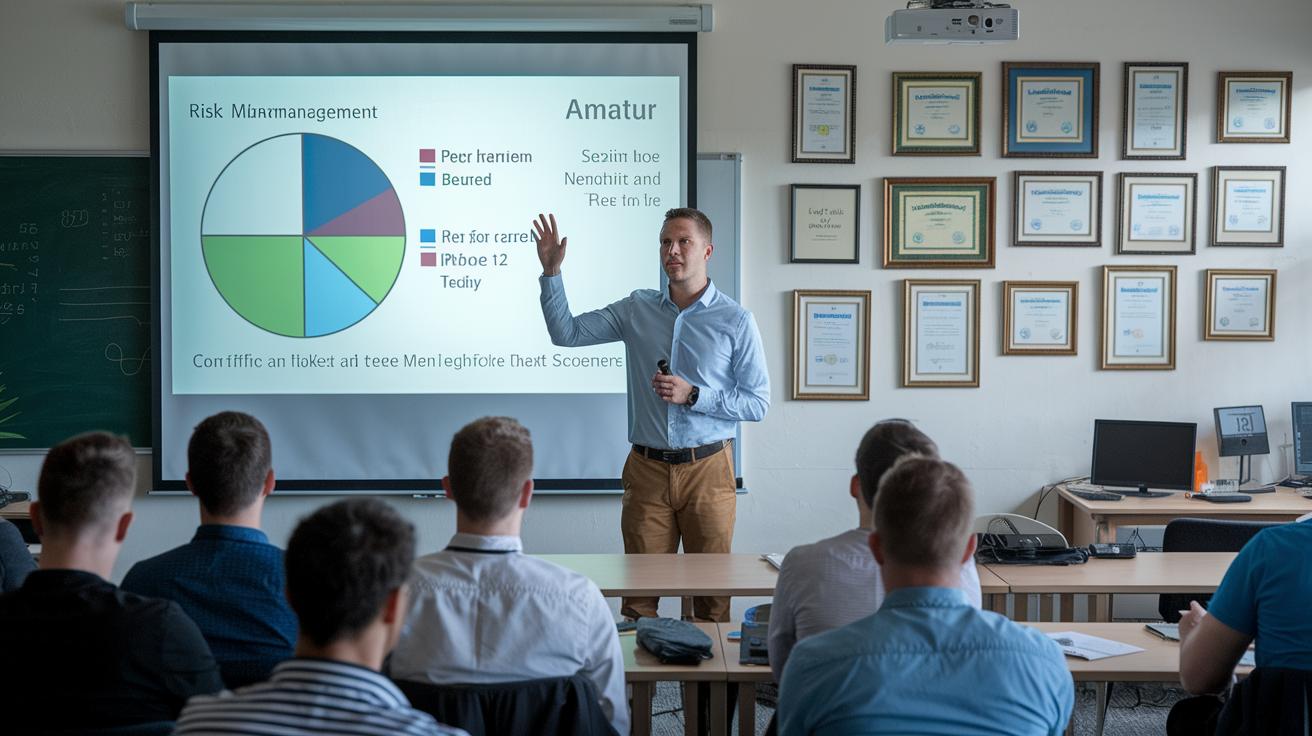
Risk management programs lean on top credentials like Certified Risk Manager (CRM) and Financial Risk Manager (FRM) as clear signs of quality. Many courses now add digital compliance certificates that prove a participant’s ability to tackle unforeseen challenges. These programs follow strict industry standards to keep the curriculum reliable, fresh, and in tune with new regulations.
Most instructors have over ten years of hands-on experience, often backed by degrees in finance, safety, or related fields. Their real-world expertise and ongoing learning make complex risk ideas easy to understand. They regularly update course content so that lessons keep up with market shifts and regulatory changes.
When you choose a course with these certifications and seasoned educators, you get a balance of strong theory and practical know-how for smart risk management. This expert support paves the way for career growth and robust risk mitigation strategies. In short, these trusted programs not only meet tough standards but also empower professionals to drive real change in their organizations.
Applied Case Studies and Industry Applications in risk management training
Real-world examples show how training in risk management can help turn theory into practical skills. In one example from the financial world, companies run simulation exercises that put portfolios through stress tests. This lets team members see how to measure risk and plan quick fixes in real market conditions. In another example from the food industry, staff learn how to adjust safety procedures and simplify communication when following Natasha’s Law, ensuring that food businesses meet safety standards. A tech company also runs cybersecurity drills where teams face fake cyber-attacks to boost their quick response and keep a constant eye on potential threats.
Discussion forums and scenario labs play an important role, too. They give participants a chance to swap ideas and review real challenges, which helps build solid risk control strategies. This learning is often backed up by sessions with top executives, like CEO training, which sets a high bar for risk strategy in any business.
| Case Study | Focus |
|---|---|
| Financial Sector Simulation | Stress-test portfolios and plan rapid responses |
| Food Industry Allergen Management | Enhance safety protocols and streamline communication under Natasha’s Law |
| Tech Cybersecurity Drills | Practice swift responses to cyber-attacks and maintain continuous risk monitoring |
Scheduling, Pricing, and Access for risk management training Programs

Risk management training is designed to suit various budgets and busy schedules. You might pick a half-day workshop for $500, an online course that stretches over 12 weeks for up to $3,000, or even arrange a custom session that fits your company’s specific needs. Whether you’re honing project risk evaluations or gearing up for crisis management, these options give you the flexibility you need.
Enrollment for open sessions happens quarterly. And if you’re after a custom workshop, like a structured response session, you can set that up on demand too. This variety means you can match your training to both your time and budget while still getting solid, practical insights.
| Provider | Format | Duration | Cost |
|---|---|---|---|
| Risk Experts Inc. | Half-Day Workshop | 4 hours | $500 |
| Global Training Solutions | Online Course | 6 weeks | $2000 |
| Elite Corporate Training | Custom Session | 12 weeks | $3000 |
Choosing the Right risk management training for Your Organization
Finding the training that fits your organization starts with matching the program to your unique needs. Think about your team's skill level, industry rules, and any must-have certifications. Options range from easy-to-follow beginner courses to more advanced classes on hazard mitigation. Whatever you choose, it should work with your budget and schedule. Nowadays, many providers offer digital courses you can use on your phone, making it easier to mix risk management into your daily work life.
When you compare different training options, keep these five simple tips in mind:
- Accreditation: Check that the certifier meets your industry’s compliance standards.
- Audience Fit: Choose a course geared to your team’s experience.
- Delivery Format: Decide if a live class, online workshop, or on-demand module fits best.
- Budget: Look for a balance between cost and quality.
- Leadership Focus: For managers, compare how well the training matches leadership development programs.
This clear approach helps you pick a training program that supports your organization's goals and fits smoothly into your operations.
Final Words
In the action, this review shows how risk management training equips professionals with hands-on skills to identify and manage risks. The overview breaks down various training formats, detailed course modules, and real-world case studies that bring practical insights to life.
Each section highlights how these programs help sharpen strategies and boost decision-making. With a good mix of interactive sessions and expert-led modules, risk management training offers a smart way to prepare for the challenges ahead.
FAQ
What are the different formats available for risk management training?
The different formats available for risk management training include employee sessions, online courses, downloadable PPTs and PDFs, specialized military programs, and even free modules. These flexible methods cater to various learning preferences.
What does risk management training certification entail?
The risk management training certification involves completing accredited programs that assess your ability to identify, analyze, and mitigate risks. It validates your skills and understanding of risk oversight in professional environments.
What are the 4 C’s of risk management?
The 4 C’s of risk management consist of Cost, Capability, Control, and Communication. They provide a straightforward framework to evaluate financial impact, team readiness, risk measures, and stakeholder information sharing.
What are the 5 principles of risk management?
The 5 principles of risk management include identification, assessment, mitigation, monitoring, and reporting. Each principle offers a step to systematically process risks and establish effective measures to counteract them.
What are the 5 stages of risk management?
The 5 stages of risk management are risk identification, assessment, mitigation, monitoring, and reporting. These stages guide organizations in structured risk review and provide clear steps to handle and communicate threats.