

Ever thought the market acts like it has a mind of its own? Market sentiment tools take raw numbers and turn them into simple signals that reflect investor moods. They blend hard data with real market emotion to help you see trends and adjust your strategy.
For example, tools like the VIX and the fear & greed index tell you if investors are riding high or holding back. This guide explains how these indicators work and how they can boost your trading confidence, giving you a clearer picture of market moves.
Understanding Market Sentiment Indicators and Their Role
Market sentiment indicators help us understand how investors feel about the market. They turn complex financial signals into clear insights by relying on math models and real market data. This gives traders and investors a simple way to see how overall mood might affect price changes.
These indicators act as helpful guides for spotting trends and shifts in investor confidence. They track key numbers that point to both optimistic and cautious moods. In doing so, they help traders adjust their strategies and even find opportunities that go against the crowd when the market feels too happy or too gloomy.
- CBOE Volatility Index (VIX): This tool shows the market's expected 30-day ups and downs based on S&P 500 options.
- Fear & Greed Index: It measures investor emotion on a scale from 0 to 100, highlighting when feelings hit extreme highs or lows.
- Put/call ratio: This compares the number of put options to call options, giving clues about how investors are leaning.
- Bull/bear sentiment surveys: These surveys collect direct feedback on whether investors are feeling optimistic or cautious.
- NASDAQ 52-week high/low metrics: These numbers compare current prices to past highs and lows, reflecting market momentum.
By combining historical data with real-time insights, these indicators offer a full picture of the financial climate. They help spot repeating trends and possible turning points. In short, using these tools lets investors shape their strategies based on real market emotions, boosting confidence when making trading moves.
Types of Market Sentiment Indicators and Measurement Methodologies
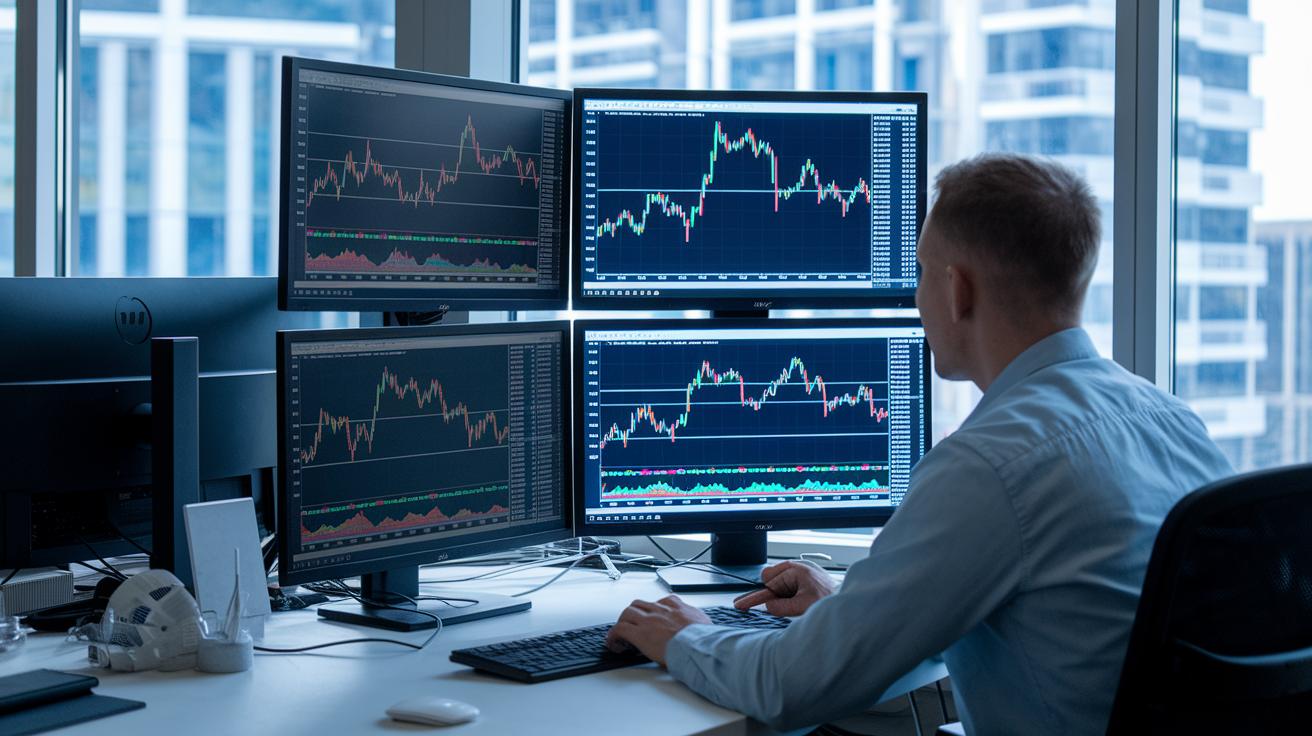
Market sentiment indicators give traders and investors a clear feel for the mood in different markets like stocks, forex, crypto, and commodities. We can break these tools into four groups that each pull insights from unique data sources. By using methods such as investor surveys, price trends, option trading figures, and technical analysis, these indicators help you make timely decisions. Think of them as guides that show how the market is feeling, be it in stocks, forex, crypto, or commodities.
Survey-Based Indicators
Investor surveys ask participants if they feel hopeful or cautious about the market. They provide a simple look at the mood among traders, which becomes extra helpful when the market feels uncertain.
Market-Based Indicators
Market-based indicators use real-time price data and historical highs and lows to measure confidence. Tools like the VIX reveal how buyers and sellers are currently behaving, offering a snapshot of market strength or worry.
Derivatives-Based Indicators
Tools based on derivatives, like the put/call ratio, compare the number of put options to call options. This ratio quickly shows whether investors are leaning toward caution or optimism, making it easier to spot sudden shifts in market mood.
Technical Sentiment Readers
Technical sentiment readers rely on moving averages to spot trends in market momentum. For example, the 200-day moving average can highlight long-term shifts in mood that might not be visible from day-to-day price changes.
| Category | Data Source | Example Indicator |
|---|---|---|
| Survey-Based | Investor Surveys | Bull/Bear Sentiment Surveys |
| Market-Based | Price Data | VIX, High/Low Metrics |
| Derivatives-Based | Option Data | Put/Call Ratio |
| Technical Readers | Moving Averages | 200-Day Moving Average |
Interpreting Market Sentiment Indicators: Practical Insights for Investors
Market sentiment indicators work like a pulse check for the market. For example, when the VIX climbs above 30, it often means traders are feeling very nervous. On the flip side, if the Fear & Greed Index dips below 20, it shows a wave of pessimism. Think of these numbers as a kind of "emotion detector" that helps flag when the market mood might be shifting.
Some investors see these extreme readings as a cue to do the opposite of the crowd. When numbers hit record highs or lows, it might be a sign that a market reversal is on the horizon. For instance, a very low reading can sometimes mean that fear has run its course and new opportunities may be emerging. Contrarian traders use this idea to guide their strategies, looking for moments when market sentiment doesn’t match up with the fundamentals.
Mixing sentiment indicators with other analysis tools can boost their reliability. Many investors combine these readings with both fundamental data and technical trends to double-check what the market is really saying. This integrated approach, comparing what’s happening now with historical patterns, helps build a strong decision-making routine. Ultimately, fusing market emotions with hard data can give you the confidence to manage your risk and make balanced choices.
Limitations and Risks of Market Sentiment Indicators
Market sentiment indicators depend on data that might be skewed by media hype, low trading volumes, or simple mistakes in data gathering. These issues can lead to false signals, causing traders to act on information that isn't entirely accurate. Even trusted metrics may hit a snag if their underlying data isn’t solid, so it's smart to double-check before making any moves.
Human behavior adds another twist. When traders get caught up in herd behavior or panic selling, the indicators can give a distorted picture of market confidence. Relying only on these signals, without digging into the core market fundamentals, can lead to mistimed trades or missed opportunities. That's why it's wise to look for extra confirmation before deciding on your next step.
Some experts argue that sentiment data on its own can’t reliably predict price changes. The idea behind the efficient market hypothesis is that all available information, including market emotions, gets quickly factored into the price. This serves as a reminder: while sentiment indicators are useful, they shouldn't be your only tool in making sound trading decisions.
Advanced AI-Driven Market Sentiment Indicators
AI now digs through massive piles of news, social chatter, and financial reports using natural language processing and machine learning. Think of it as a tool that turns complicated language into simple market cues. For instance, an adaptive algorithm can spot shifts in market mood almost as soon as they happen.
Real-time dashboards let you see mood swings within the day across different asset classes. They track every little change, giving you a quick look at current market feelings. And with smart adjustments updating the data on the fly, the insights remain fresh and useful.
Adding even more clarity are algorithmic mood scanners that catch sudden spikes of excitement or abrupt bouts of panic. These scanners pick up brief signals that other methods might overlook, opening up fast-acting opportunities. By blending natural language processing with smart algorithms, traders get a solid, ever-updating snapshot of market emotions that helps them tweak their strategies in a fast-paced environment.
Integrating Market Sentiment Indicators into Your Trading and Investment Strategies
Market sentiment indicators act like a mood meter for the market, giving you a clear view of the overall vibe. They show how investors feel at any given moment and help you understand shifts in optimism. This means you can navigate changes with more confidence when trading or investing.
Start off by setting clear goals. For example, decide on the sentiment levels that will signal major changes. If your indicator shows a high level of optimism, it might mean the market mood is shifting. These guidelines help you fine-tune when to enter or exit your positions and keep your portfolio steady.
Next, combine sentiment data with performance metrics and diversification plans. Traders often adjust their positions based on current risk levels, while investors might shift their allocations to match new trends. This strategy turns raw sentiment numbers into real signals that help sharpen your decision-making process.
Lastly, keep an eye on both real-time and past sentiment reports. Regular monitoring allows you to see changes in investor behavior and adjust your plans accordingly. In the long run, this habit is key to staying in tune with market vibes and keeping your trading strategies effective.
Final Words
In the action, we explored how market sentiment indicators help gauge investor mood using various tools, from survey responses to cutting-edge AI scans. The piece broke down methods for measurement, offered practical steps to interpret signals, and warned about pitfalls that could distort readings. We also highlighted the shift toward real-time analysis, proving that blending traditional techniques with modern data can sharpen decision-making. These insights keep you well-equipped to spot opportunities and make timely, strategic moves in an ever-changing market.
FAQ
How can I access a free market sentiment indicator?
The free market sentiment indicator provides basic real-time readings of investor moods using simple analytical tools available on online platforms without requiring a subscription.
What is the best market sentiment indicator?
The best market sentiment indicator combines data from tools like the VIX, put/call ratio, and Fear & Greed Index to offer a well-rounded view of market emotions and potential trading signals.
What does market sentiment today refer to?
The market sentiment today reflects the current investor mood based on real-time price movements and data, highlighting whether the market is leaning toward optimism or caution.
How does TradingView support market sentiment analysis?
TradingView integrates technical charts with sentiment overlays, allowing users to quickly see trends and emotional shifts in the market, which helps in timing entry and exit points.
How does the Fear and Greed Index factor into crypto and live markets?
The Fear and Greed Index, whether for crypto or live markets, measures extreme emotions by analyzing market data, helping investors identify when fear or greed might be driving prices.
How often does a 20% market correction happen?
A 20% market correction normally occurs every few years, marking significant downturns in market optimism when investors adjust their views amid rising uncertainty.
What are common indicators of market sentiment?
Common indicators of market sentiment include the VIX, put/call ratio, bull-bear surveys, high/low price metrics, and the Fear & Greed Index, each delivering unique insights into investor moods.
What is the 3 5 7 rule in stocks?
The 3 5 7 rule in stocks provides a guideline for assessing trend consistency and managing risk, offering a simple framework for evaluating market movements and making balanced decisions.