

Have you ever noticed how one unexpected tweet can suddenly lift stock prices, even when a company’s numbers seem unchanged? It’s like the market catches a burst of energy from somewhere unexpected.
In one corner, you have the quick buzz of market sentiment, social media chatter, headlines, and investor reactions that move fast. Meanwhile, steady financial data works quietly in the background, slowly building real value over time.
This post looks at both sides of the coin. It explains how rapid, gut reactions blend with patient, detailed analysis. Doing so can help you figure out when to act on a sudden market pop and when to wait for the long haul.
Key Differences Between Market Sentiment and Market Fundamentals
Market sentiment is the overall vibe investors feel, it can be upbeat, downbeat, or somewhere in between. It moves quickly, driven by emotions, news, rumors, or even buzz on social media. Think about that moment when a piece of surprising news sends prices soaring in just minutes. It’s like the mood shifts we experience every day. For example, before she became a famous scientist, Marie Curie once carried radioactive test tubes in her pockets, not knowing the risks that would later define her work.
On the flip side, fundamental analysis digs into the real value of a company by looking at hard data like financial statements, earnings, and key figures such as price-to-earnings or dividend yields. This method is all about the long-term. Data becomes the quiet, steady force that guides smart investment choices, kind of like building a strong foundation brick by brick.
The two approaches also differ in timing. Market sentiment can create quick swings in prices because investors react to immediate events. Meanwhile, fundamental analysis offers a more patient view, focusing on a company’s lasting financial health. Many investors mix these strategies, using sentiment to decide when to jump in or out, while depending on fundamentals to steer their long-range plans.
In the end, experienced investors know that while sudden shifts in sentiment might cause rapid price changes, the true worth of a company is reflected in its steady, long-term financial performance.
Market sentiment vs market fundamentals: A Clear Outlook
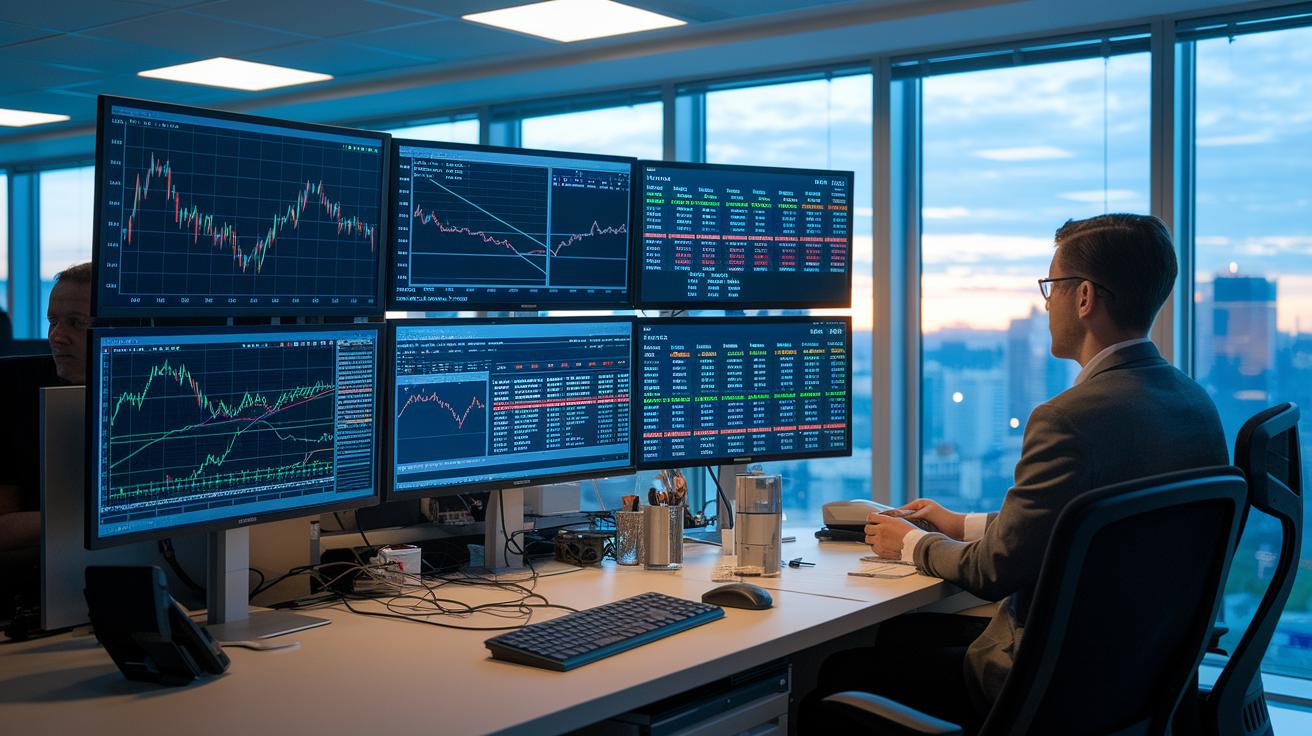
Traders rely on hands-on tools to notice quick shifts and monitor long-term financial health. They watch technical cues like the VIX, put-call ratios, and investor surveys for sudden changes while checking fundamentals using price-to-earnings ratios, dividend yields, debt-to-equity ratios, and liquidity measures.
Think of it like this: a sudden spike in trading volume , much like a loud shout in an otherwise calm room , hints at strong market feeling. Meanwhile, a company consistently offering a stable dividend shows it has solid long-term power.
Below is a table showing key numbers to watch:
| Metric Category | Example Indicator |
|---|---|
| Sentiment | Volatility Index (VIX) |
| Sentiment | Put-Call Ratio |
| Sentiment | Investor Surveys |
| Fundamentals | Price-to-Earnings Ratio |
| Fundamentals | Debt-to-Equity Ratio |
| Fundamentals | Dividend Yield |
Bringing these indicators together creates a full picture that mixes quick technical signals with deeper financial insights. Have you ever wondered how these pieces fit together? For a closer look at technical sentiment, check out the guide "how to measure market sentiment" (https://smartfinancialtrends.com?p=825). And for a deeper dive into fundamentals, take a look at "evaluating the impact of macroeconomic factors on market dynamics" (https://sharingeconom.com?p=1788).
How Market Sentiment and Market Fundamentals Drive Price Movements
Investor moods often shift prices in a flash. When people get excited or nervous, trading volumes can spike, quickly altering the balance between supply and demand. For example, imagine a rumor that sends a stock soaring even before any official earnings report is released. Even the best companies can see wild price changes when market buzz builds up.
Fundamental data, on the other hand, act like a steady referee. They show the true financial health of a company and give long-term investors a clear benchmark. Even during times of wild highs or deep lows, ratios such as price-to-earnings or dividend yields help guide prices back to their real values. This steady data offers a kind of risk check, reminding us to tread carefully when prices move too fast.
Quick swings might dazzle, but over time, trends tend to align with solid, underlying financial strength.
- Momentum signals in market prices
- Steady insights from fundamental data
- Risk measures that advise caution
- Strategies rooted in real financial health
Understanding these elements can help traders balance those swift market moves with a focus on lasting fundamentals.
Divergence of Market Sentiment and Fundamentals: Real-World Case Studies

Real-world examples from the stock market show that investor mood and solid financial data don’t always move in sync. Sometimes even strong numbers can get overshadowed by the prevailing sentiment among investors. Other times, robust fundamentals hold a stock steady despite market jitters.
Take Infosys Ltd. and Reliance Industries, for example. Their stocks enjoyed a strong rally when upbeat investor chatter matched impressive quarterly earnings. Imagine a scene where happy market talk fuels buying just as solid numbers shine through, pushing prices higher.
On the flip side, Yes Bank Ltd. saw its stock plunge when negative sentiment dominated. Think about it: even if the financial signs aren’t great, a wave of pessimism can trigger a quick sell-off that deepens the drop.
Then there’s Tata Motors Ltd. Here, global factors like sudden currency shifts or unexpected geopolitical events cause short-term mood swings. Even with steady fundamentals, these temporary dips in sentiment can create noticeable price volatility.
These cases remind us that sentiment can multiply market moves. When good feelings meet strong data, stocks tend to climb; when fear takes over, prices can stray from their true value. Have you ever noticed how quickly market moods can change and affect investment decisions?
Integrating Market Sentiment with Fundamental Analysis for Investment Strategies
Smart investors mix real-time market mood with thorough financial checks to make better trade decisions. Day traders look at short-term signals like sudden spikes in trading volume or chatter online, while value investors lean on solid numbers such as earnings and price ratios for more steady picks.
Many now use a combined method with clear rules. For example, a strong retailer might post impressive quarterly earnings alongside a burst of online buzz. One striking case: when a tech stock hit record revenue, its shares jumped 5% after influencers raved about a new product. This shows that pairing solid fundamentals with market excitement can be a winning strategy.
Clear guidelines help keep decisions on track. Investors can set up sentiment triggers that only kick in when a company reaches key financial milestones or when earnings back up the market buzz. This tactic lowers the chance of chasing hype without real value.
Here are some practical tips:
- Use short-term mood signals to set entry points.
- Check core financial numbers when screening investments.
- Time your moves only after confirming both a positive market mood and strong earnings data.
Modern tools now mix sentiment analysis with basic financial checks to spot opportunities automatically. For instance, if a beverage maker shows steady growth and positive online chatter during a product launch, these tools might signal it as a good time to buy.
This smart blend of real-time market feelings and solid financial data gives a full picture. It captures quick market moves while keeping decisions disciplined and data-driven.
Tools for Combined Market Sentiment and Fundamental Assessment

Modern platforms now offer unified dashboards that mix real-time social sentiment with key financial data. They let you see the market's mood right next to important metrics, like a company’s earnings. Imagine checking a dashboard that shows the latest earnings report while a cloud of online chatter suddenly spikes.
Behind the scenes, smart data-mining tools scan social media, news, and forums as events unfold. They feed this real-time sentiment into algorithms that also track technical and financial cues. Think of it as an algorithm that catches both a sudden shift in market mood and changes in financial ratios, helping you adjust your strategy quickly.
Customizable alerts further simplify things by flagging when market sentiment and core valuation data don’t match up. At the same time, macro indicator matrices combine big-picture economic data with sentiment scores. For instance, you might see an alert saying, "When market buzz diverges sharply from established valuation trends, it’s time to reassess your positions."
Challenges in Balancing Market Sentiment with Fundamental Insights
Market mood can be tricky to read because our brains often play tricks on us. When investors follow the herd or only look for info that supports their own views, this can cloud the true state of the market. Sudden bursts of news or rumor can send out a false alarm, making it seem like big changes are happening even when the core fundamentals stay steady.
In our fast-paced world, news spreads like wildfire. This quick flow can lead traders to chase after short-term moves, almost like trying to catch a fast-moving shadow. That lively market chatter often drowns out the slower but sturdier signals offered by financial data, leaving investors to react before the solid numbers come in.
Fundamental data is vital for long-term decisions, but it sometimes lags behind real-time events. This delay can risk missing out on good opportunities if it's taken at face value without a closer look. And because investors act in different ways, the gap between the market's mood and its true valuation can widen.
The key is to stay disciplined. By balancing the swift signals of market sentiment with the reliable pulse of fundamental data, investors can steer clear of wild swings driven by momentary emotions.
Final Words
In the action, we examined how investor mood and core valuation influence price moves. The blog showcased distinct triggers behind swift shifts and steady trends, highlighting tools and case studies that offer a practical comparison between short-term sentiment and long-term fundamentals.
Investors gain a sharper edge by blending these perspectives. By weighing data on market sentiment vs market fundamentals, smart financial decisions become more attainable. Stay engaged and keep refining your approach to capture real opportunities as they arise.
FAQ
Q: What is the difference between fundamentals and sentiment?
A: The difference between fundamentals and sentiment is that fundamentals focus on a company’s core financial health through earnings, balances, and ratios, while sentiment captures investor moods that drive short-term price movements.
Q: What do market fundamentals mean?
A: Market fundamentals mean the core financial measures of a company, such as earnings, debt levels, and valuation ratios, which help determine its intrinsic long-term value.
Q: What does market sentiment mean?
A: Market sentiment means the overall mood of investors, reflecting emotions and reactions to news that can trigger short-term market movements.
Q: What is the 90% rule in trading?
A: The 90% rule in trading is a risk management guideline suggesting that even if most trades underperform, a few successful ones with strong rewards can outweigh the losses, emphasizing a favorable reward-to-risk strategy.