

Is it possible that strong consumer demand is driving both higher prices and a boost in market optimism? When shoppers buy goods faster than companies can make them available, a process known as demand-pull inflation kicks in, causing prices to climb. This scenario creates a unique blend of enthusiasm and wariness among market participants. Lower borrowing costs and rising consumer confidence spur spending, leading to short bursts of economic growth. At the same time, these rapid shifts serve as a reminder that supply may eventually lag behind demand, hinting at challenges ahead.
Demand-Pull Inflation Sparks Market Optimism
Demand-pull inflation takes place when consumer demand for goods and services outstrips available supply, pushing sellers to raise prices due to constrained resources. The situation is succinctly described as "too much money chasing too few goods." Think of a sold-out concert where high ticket demand forces vendors to increase prices as buyers compete for each ticket.
This inflation is largely driven by factors like lower interest rates and increased consumer confidence. When borrowing becomes cheaper, people spend and invest more, which in turn boosts overall consumption and creates upward pressure on prices. For instance, if a bank reduces its interest rates, households may quickly rush to purchase durable goods, and the resulting spike in demand overwhelms the available supply, leading to higher prices.
Unlike cost-push inflation, where rising production costs cause price increases, demand-pull inflation stems from excessive demand relative to supply. Though this type of inflation has been unusual in recent decades, periods such as 2022 and 2023 showed signs of rapid consumption and a positive market mood. In these times, the balance between strong consumer activity and limited product availability signals economic growth while also posing challenges for keeping prices stable across various sectors.
Primary Triggers of Demand-Pull Inflation in Modern Economies

Low interest rates set by expansionary monetary policies often trigger a surge in consumer spending. For instance, when a local bank lowers its rates, everyday shoppers hurry to stores, keen to make big purchases before prices climb. This sudden increase in demand can eventually lead to higher prices in various important sectors.
Government fiscal stimulus efforts are another key factor, as they put extra funds into circulation within the economy. As consumers experience growth in household incomes and gaining confidence, their buying activity picks up noticeably. The ease of obtaining loans and a broader credit availability only boost this spending spree further, sometimes overwhelming existing supplies.
The primary elements fueling demand-pull inflation include:
- Expansionary monetary policy, such as maintaining low interest rates
- Fiscal stimulus programs that introduce additional liquidity into the market
- Increasing household income paired with rising consumer confidence
- A surge in credit availability combined with favorable loan conditions
- Expanding government budgets during tight market scenarios
Together, these factors create an environment where strong demand sends prices upward, as producers struggle to keep pace with the rapid increase in consumer purchases.
Demand-Pull vs Cost-Push Inflation: Key Differences and Interactions
Demand-pull inflation happens when consumer spending grows so rapidly that it exceeds the available supply, causing sellers to raise prices because production and distribution cannot keep up. When borrowing is easy because of low interest rates, people tend to spend more, which in turn pushes prices higher. On the other hand, cost-push inflation takes place when companies face increased production costs, such as higher prices for raw materials and labor, and then pass these costs on to consumers. For instance, if the price of steel jumps sharply, manufacturers might raise their product prices. This comparison shows that while strong consumer spending drives demand-pull inflation, cost-push inflation is mainly a response to rising production expenses.
| Feature | Demand-Pull Inflation | Cost-Push Inflation |
|---|---|---|
| Origin | High consumer demand pushes prices upward | Increased production costs lead to higher prices |
| Mechanism | Driven by surges in spending, often aided by low interest rates | Fueled by rising costs for raw materials and labor |
| Policy Response | Often managed by raising interest rates to cool spending | Tackled with supply-side strategies rather than just demand controls |
Policymakers must approach these situations with different strategies. For demand-pull inflation, increasing interest rates can help rein in excessive spending. In contrast, cost-push inflation requires targeted actions that address the challenges in production directly. Understanding these differences is essential in crafting economic policies that maintain stability even when high demand and production constraints occur at the same time.
Historical and Contemporary Case Studies of Demand-Pull Inflation

In the early 2000s, inflation primarily stemmed from increased production costs, with consumer demand gradually beginning to outstrip production capabilities. Over time, small but steady rises in consumer spending signaled a change and set the stage for more pronounced demand-pull inflation that became evident during later economic recoveries.
The inflation episode of 2022 and 2023 clearly illustrates this shift. Instead of mainly being driven by higher production costs, a surge in spending after the pandemic led to a situation where an abundance of money competed for a limited supply of goods. One vivid example is found in the tech sector. As consumers rushed to update their devices, manufacturers struggled to keep up resulting in noticeable price increases. After emerging from prolonged lockdowns, a surge in online gadget purchases outpaced inventory levels, driving prices higher almost overnight. This scenario highlights the strong impact when overall consumption far exceeds production capacity.
Data from reputable sources such as the St. Louis Fed reinforces these observations. Their reports show that increased household incomes along with low interest rates and relaxed credit conditions have collectively sparked inflationary pressures distinct from the earlier eras dominated by rising production costs. Picture local shops rapidly depleting their stocks amid a wave of enthusiastic buyers, a clear reflection of how historical and recent data confirm that demand-pull inflation can significantly influence market dynamics when consumer spending accelerates.
Market and Consumer Impacts of Demand-Pull Inflation
When demand significantly exceeds supply, prices for consumer goods and housing tend to climb across the board. Producers find it increasingly difficult to keep up, leading to shortages and unpredictable cost fluctuations. Picture a busy market where a surge of customers quickly depletes available goods, causing sellers to rush to restock and trigger rising prices. This disparity between supply and demand can send shock waves through the economy, affecting even those sectors that typically do not feel such pressure.
The Phillips Curve presents an interesting short-term relationship between higher inflation and lower unemployment. However, while job figures might improve, households may find their real income eroded by the escalating costs. With diminished purchasing power, consumers often face tighter budgets even in times of labor market strength, prompting a decline in everyday spending. An in-depth discussion on these dynamics can be found in the article titled "evaluating the impact of macroeconomic factors on market dynamics."
As household budgets are strained by rising costs, shoppers are compelled to rethink their spending habits. The resulting decrease in purchasing power forces many to shift priorities, cutting back on nonessential purchases. Consider a family that must reorganize its finances in response to rapid hikes in the prices of essentials like food and energy. This situation illustrates how demand-pull inflation can generate market optimism in some areas while simultaneously challenging everyday financial stability.
Policy Responses to Manage Demand-Pull Inflationary Pressures
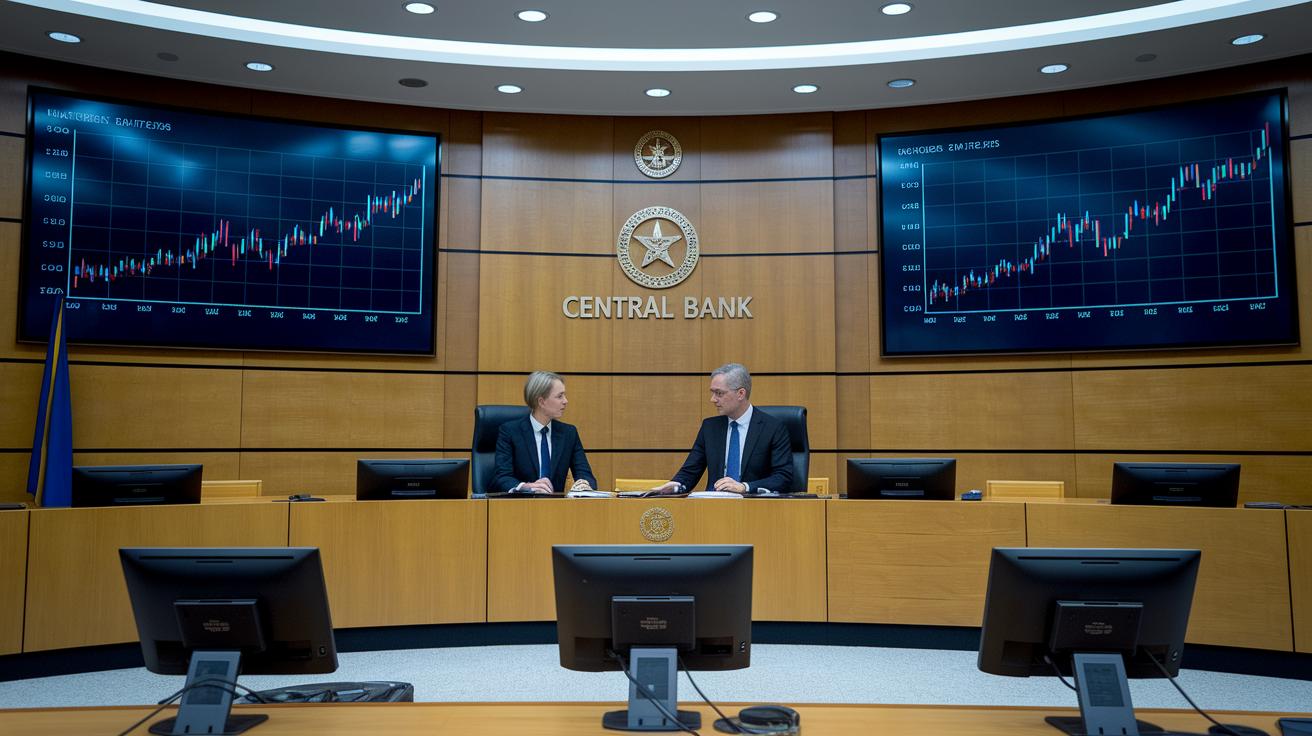
Central banks usually address rising demand-pull inflation by raising interest rates. This action is intended to slow consumer spending and ease supply limitations, as higher borrowing costs cause a reduction in credit growth. For example, an increase in interest rates can prompt households and businesses to delay significant purchases, leading to a steadier increase in overall demand. Analyzing how monetary policy measures travel through the economy can offer valuable insights into these changes.
Fiscal authorities also play a key role by adjusting government stimulus programs. Reducing or re-evaluating fiscal support helps to cool an overheated economy by removing excess liquidity, which in turn prevents rapid surges in spending. When stimulus efforts are scaled back, the pressure on prices eases, giving producers ample time to adjust supply levels. Research into fiscal policy and its effects on various economic sectors sheds light on these broader implications.
A balanced combination of monetary and fiscal strategies is often essential to restore equilibrium between supply and demand. This integrated approach, which pairs tighter credit conditions with a careful reduction in stimulus, seeks to keep inflationary pressures under control while avoiding an abrupt economic downturn. Policymakers must continuously review the success of these measures to maintain stable prices and ensure sustainable economic growth.
Visualizing Demand-Pull Inflation: Graphs and Models
Graphs and models play a critical role in helping us understand how demand-pull inflation works by showing how sudden shifts in consumer behavior influence price changes. The Phillips Curve, for example, is a practical tool that explains the link between inflation and unemployment. It demonstrates how decreasing unemployment can be accompanied by rising prices. One might see a Phillips Curve that highlights a sharp rise in inflation as unemployment declines, which clearly points to an excess of demand.
Time-series charts also capture these demand surges by mapping the connection between production delays and subsequent price hikes over time.
Furthermore, visual models help to track sudden changes in consumer spending and reveal subtle trends in market reactions. Bar graphs and line charts show how quick increases in consumer spending form demand peaks that producers find difficult to meet. These visual aids allow analysts to identify moments of rapid cost fluctuation and to understand how short-term shifts in demand can boost overall market confidence even when prices are on the rise.
Final Words
In the action, the article details how rising aggregate demand pushes prices through demand-pull inflation. It examines key elements, mechanisms of excess demand, contrasting it with other inflation types, and illuminating real-world cases that shape economic conditions. The discussion also highlights the roles of monetary and fiscal policies and the usefulness of graphical data in clarifying these concepts.
Throughout the post, the analysis remains focused on demand pull inflation, showcasing its complexity and impact. The insights provided pave the way for a deeper understanding and a more positive outlook on managing economic challenges.
FAQ
What is demand-pull inflation?
The concept of demand-pull inflation explains when overall demand exceeds available supply, causing sellers to raise prices as consumers compete for limited goods and services.
What is a real example of demand-pull inflation?
A real example of demand-pull inflation occurred during the post-pandemic recovery when rapid consumer spending exceeded production capacity, leading to significant price increases across multiple sectors.
What are the causes of demand-pull inflation?
The causes of demand-pull inflation include increased consumer spending, expansionary monetary policies, fiscal stimulus, rising household incomes, and overall aggregate demand that outpaces available supply.
Is demand-pull inflation good?
The assessment of demand-pull inflation is mixed; moderate levels can support economic growth, yet excessive inflation erodes purchasing power and disrupts market stability, often requiring policy interventions.
What is the demand-pull inflation formula?
The demand-pull inflation formula quantifies how price levels rise when aggregate demand significantly exceeds supply, though specific models may vary depending on the economic context and measurement methods.
What is cost-push inflation and how does it compare to demand-pull inflation?
The concept of cost-push inflation involves rising production costs forcing higher prices, contrasting with demand-pull inflation where increased consumer demand drives price hikes through market imbalances.
What does a demand-pull inflation diagram illustrate?
A demand-pull inflation diagram visually illustrates the imbalance between aggregate demand and supply, showing how increased consumer spending drives prices upward when supply is insufficient.
What are the negatives of demand-pull inflation?
The negatives of demand-pull inflation include diminished purchasing power, supply shortages, market imbalances, and potential overheating of the economy, all of which can hinder long-term economic stability.
What are the three types of inflation?
The three main types of inflation are demand-pull inflation, where excess demand drives prices up; cost-push inflation, where rising production costs are passed on; and built-in inflation, which results from adaptive wage-price spirals.
Where can I find academic PDFs on demand-pull inflation?
Academic PDFs on demand-pull inflation are accessible via research databases, economic journals, and institutional websites that offer in-depth analyses on the mechanisms and impacts of inflation.