
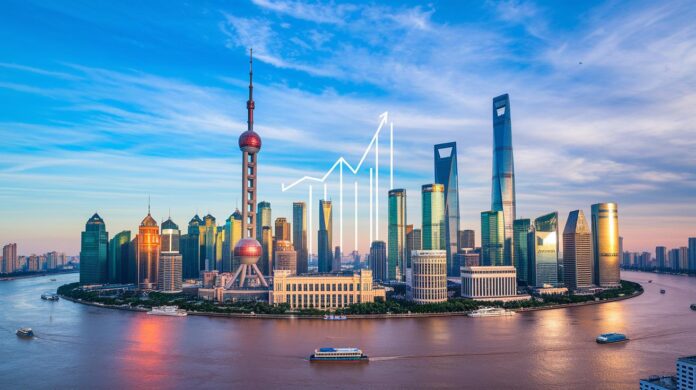
Have you ever wondered if China's booming economy is tipping the scales in global trade? Right now, China’s GDP has bounced back to nearly $17.9 trillion, a sign of strong production and fresh innovation. It’s like watching a hidden engine roar to life after being quiet for too long.
China’s rise wasn’t a sudden jump. It took three key phases to shift from tight government control to a more free, market-driven approach. Each step along the way laid down the building blocks for today’s dynamic market, much like pieces of a puzzle coming together one by one.
So, what does this mean for business leaders? Each change in China’s strategy has helped the country reach new heights, subtly altering the flow of global trade. As you see these changes, it’s a good idea to think about how they might open up new opportunities in your own business journey.
Breaking Down China’s GDP Growth Figures
China measures its yearly progress by comparing the amount of goods and services produced this year to last year. In simple terms, it calculates the percentage increase in total output while accounting for inflation and price changes. Think of it like checking a store’s sales, if sales are rising, the business is doing well. In 2023, China’s nominal GDP hit $17.9 trillion, which shows just how vast its economy is. If you’d like a deeper dive into this method, visit what is gdp growth.
Here’s a quick snapshot of the yearly growth rates:
- 2018: About 6.6% thanks to strong local demand.
- 2019: Around 6.0%, reflecting steady progress.
- 2020: Nearly 2.3% as global challenges affected production.
- 2022: Recorded at 3.0% as the economy adjusted after the pandemic.
- 2023: Jumped to 5.2%, marking a clear rebound.
Looking at a longer span gives us even more insight. Between 2000 and 2010, China’s annual growth averaged roughly 10.5%, driven by rapid industrial expansion and bold market moves. Then, from 2010 to 2020, the average slowed to about 7.3%, showing a shift towards more balanced, sustainable development. These trends help business leaders grasp how growth numbers change over time and what that means for the broader economy.
3 china gdp growth Scales New Heights

Before 1978, China’s economy was tightly controlled by the government, which kept growth slow and uneven. But once market ideas took hold, everything changed.
1980s: Reform-Era Acceleration
In the 1980s, growth jumped impressively between 9% and 15% every year. Privatization, new foreign investment, and updated industries spurred a shift. Local businesses blossomed thanks to fresh policy moves, setting the stage for rapid urban growth.
1990s: Steady Double-Digit Growth
Throughout the 1990s, China maintained strong double-digit growth, reaching up to 14.2% in 1992. A steadier financial scene and deeper ties with global trade helped fuel this progress. This was when early trials evolved into a solid economic overhaul.
2000s: Export-Led Expansion
The early 2000s saw exports become the main driver of growth. Averaging about 10.3% yearly, China’s manufacturing and export sectors powered a booming economy, much like an engine revving up in a busy factory.
2010s: Transition to Moderate Growth
By the 2010s, growth slowed to between 6% and 8% as the focus shifted to quality and sustainability. Over the long haul, China moved from wild, fast expansion to a more balanced, resilient economy that reflects thoughtful long-term planning.
Key Drivers Behind China’s GDP Growth
China's economy is growing thanks to several forces working together. The country has seen strong export sales along with heavy investments in infrastructure, tech upgrades, and city development. These key elements support both manufacturing and trade while building a strong base for lasting growth.
-
Export-led growth – In 2022, exports made up about 18% of GDP. With rising global demand, China’s products are reaching more markets. It’s a bit like a local shop suddenly getting orders from around the world, which quickly boosts its revenue.
-
Investment patterns – Fixed-asset investments top 40% of GDP. This steady flow of money is similar to a busy construction site where ongoing projects lay down a solid foundation for future expansion.
-
Infrastructure and urbanization – By 2022, 64% of China’s population lived in cities. Upgraded infrastructure and expanding city limits spark economic activity, much like renovating a town center to better serve a growing community and improve transport.
-
Innovation, tech, and reforms – A high-tech sector growing at about 15% each year pairs with smart policies and big initiatives like the Belt & Road, which has powered investments of around $1.4 trillion. This blend of tech and reform keeps industries nimble and ready to innovate.
Each one of these drivers plays a key role in powering China’s growth. The recent move to a 5.2% GDP rate in 2023 shows how strong exports, significant investments, expanding cities, and thoughtful reforms come together to fuel a robust economic engine.
Regional Disparities in China’s GDP Growth
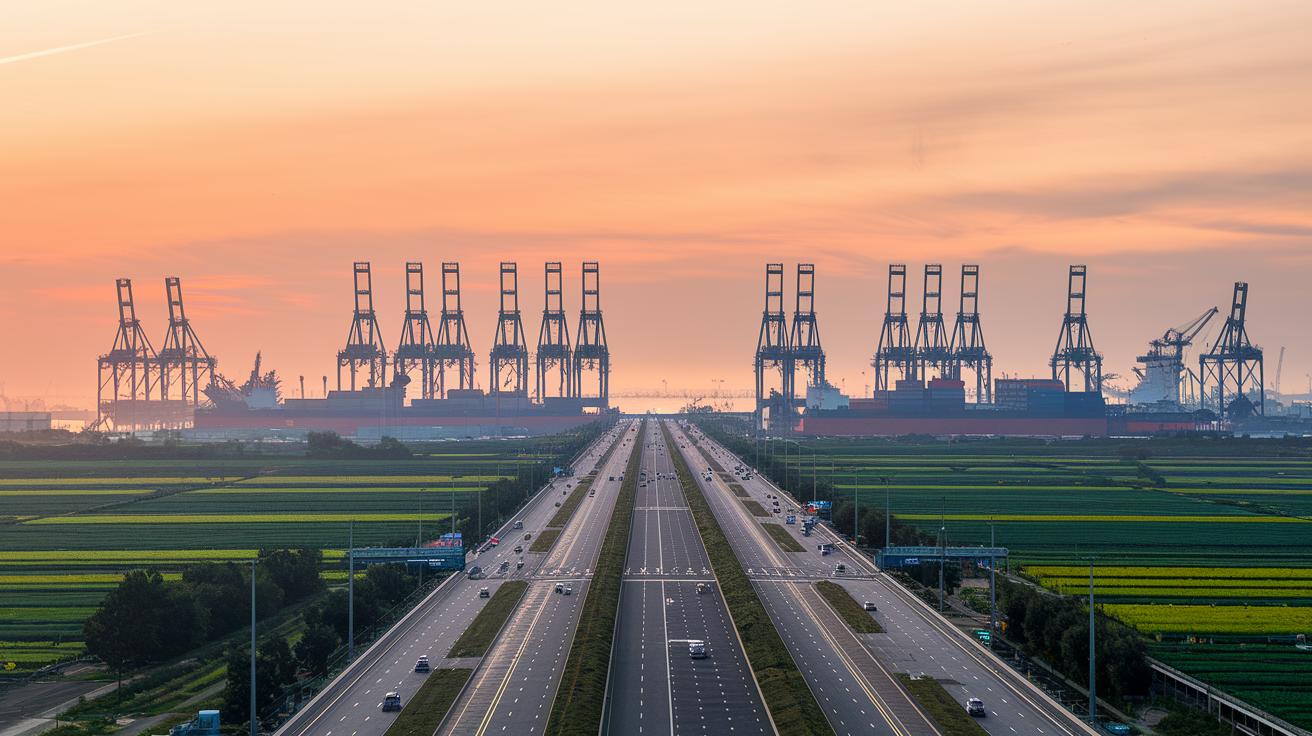
China's coastal provinces are growing faster than the inland areas because they enjoy better trade links and more modern infrastructure. For example, Guangdong, with its deep port facilities and bustling export sectors, recorded a growth rate of 6.1% in 2022. Meanwhile, many provinces in the western inland region grew around 4.5% as they face challenges like a smaller industrial base and less investment. This clear divide shapes national output and creates different business opportunities across the country.
Urban centers are buzzing with economic activity. People in cities enjoy a GDP per capita of about $18,000, while rural areas average around $7,200. These differences in infrastructure, services, and investments affect local markets and consumer spending.
| Province | 2022 Growth Rate |
|---|---|
| Guangdong | 6.1% |
| Jiangsu | 5.8% |
| Sichuan | 5.2% |
| Gansu | 4.3% |
| Tibet | 4.0% |
Comparative Analysis: China vs US GDP Growth
Recent numbers show a clear gap between China and the US. In 2022, China’s economy grew by 3.0% while the US managed a 2.1% increase. Looking ahead, the IMF expects China to grow by 5.2% in 2023 compared to just 2.0% for the US. Over the last ten years, China’s average growth of 7.4% stands in stark contrast to the US’s 2.3%. These trends tell us that the two economic giants are on very different paths.
Here’s a quick look at the key points:
- Annual growth: China consistently outpaces the US each year.
- Decadal averages: Over time, China’s growth remains much higher than US averages.
- Economic resilience: China’s dynamic economy seems to bounce back faster from shocks.
- Future outlook: Projections clearly favor China’s rebound while the US shows more stability.
These differences shape not only local policies but also global financial markets. Have you ever wondered when a shift in economic strategy might redirect investment flows or reshape trade patterns? If you want to dive deeper, check out the insights on global financial markets at https://realrealnews.com?p=130 and more details on US GDP growth at https://smartfinancialtrends.com?p=.
China GDP Growth Forecast and Future Outlook

Looking ahead, China's economy is projected to keep gaining momentum. The IMF forecasts a 4.8% growth rate for 2024, with an expected bump to 5.0% in 2025. Meanwhile, the World Bank estimates a 5.2% rise in 2024. Some analysts even suggest that a new stimulus package might add roughly 0.5 percentage points to overall growth. All of these signs point to a steady and healthy rebound, built on strong market fundamentals.
When you take a longer view, several key trends are coming into focus. Urbanization is expected to surge, with about 70% of the population likely to live in cities by 2030. Modernization across various sectors will drive productivity and shift the economic landscape significantly. It’s a scenario where everyday changes could lead to big long-term impacts.
Key drivers to watch include:
- Domestic demand and consumption
- Innovation and tech adoption
- Global trade dynamics
Final Words
In the action, we broke down China’s GDP growth figures, outlining key annual stats, comparing historical trends, and explaining main drivers like export-led expansion, investment shifts, and policy impacts.
We also examined regional spreads and compared China’s performance against US figures, all while highlighting important market shifts.
By linking clear data with economic forecasts, our discussion leaves a clear path for understanding and strategic initiatives, reinforcing the focus on china gdp growth as a vital indicator for smart business decisions.
FAQ
Q: What does China’s GDP growth represent and how is it measured?
A: China’s GDP growth represents the percentage increase in its economic output over time. Data on production, services, and other sectors are compared periodically. For more details, visit what is gdp growth.
Q: What are the recent figures for China’s GDP growth?
A: China’s GDP grew 3.0% in 2022 and rebounded to 5.2% in 2023, with nominal GDP reaching $17.9 trillion in 2023. These figures illustrate current economic trends in China.
Q: How does China’s current GDP growth compare with past averages?
A: Recent growth rates differ from the past decade’s averages—10.5% during 2000–2010 and 7.3% from 2010–2020. The current rates show a moderated pace amid evolving economic policies.
Q: What factors are driving China’s GDP growth?
A: China’s economic growth is driven by export-led expansion, robust domestic investment, rising infrastructure, and technological adoption. These factors together help maintain the country’s expansion strategy.
Q: How do regional differences impact China’s GDP growth?
A: Regional economic growth in China varies, with coastal provinces like Guangdong posting higher rates than inland or rural regions. These variations influence overall performance due to differences in investment and urbanization.
Q: How does China’s economic growth compare to that of the US?
A: While China reported 3.0% growth in 2022 and forecasts around 5.2% in 2023, the US grew 2.1% recently with lower decade-long averages. This contrast reflects differing national pace and economic structures.
Q: What are the forecasts for China’s future GDP growth?
A: Experts expect China’s GDP to grow around 4.8% in 2024 and 5.0% in 2025. These projections are influenced by strong domestic demand, ongoing innovation, and evolving global trade dynamics.