
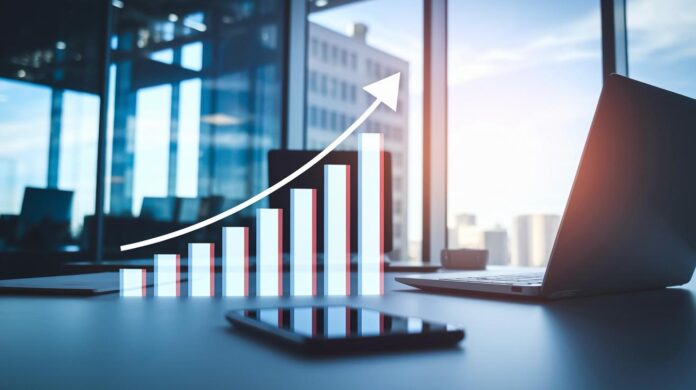
Have you ever wondered if changes in GDP might influence your job or paycheck? GDP growth shows us how much the overall value of new goods and services increases or decreases over time. When GDP goes up, it usually means more work opportunities and better earnings, kind of like a runner speeding up during a race. In this article, we’ll break down what GDP growth actually means and why it should matter to you every day.
What is GDP Growth: A Clear View
GDP growth shows how much the market value of all the final goods and services produced changes over a set period. It tells us if an economy is growing or shrinking. When GDP grows, it usually means more jobs and better incomes. On the flip side, falling GDP can hint at a slowdown or even a recession. For example, in 2022, U.S. real GDP increased by 2.1% while the global average was around 3.2%. Think of it like checking a runner’s pace in a long race, the percentage change tells you if they sped up or slowed down.
Real GDP growth strips out inflation to show the true change in production, while nominal GDP growth reflects current prices and might overstate growth if prices are rising. We look at GDP both quarterly and annually, much like checking your bank balance daily versus reviewing monthly trends. Keeping an eye on GDP helps businesses plan better and assists governments in making smart policy decisions.
- Real vs. Nominal: Real GDP cuts out the effects of inflation, giving a true view of production changes. Nominal GDP, however, can look higher simply because prices have risen.
- Measurement Frequency: GDP figures come in quarterly and annual snapshots, offering both a quick check and a long-term view, kind of like comparing a daily bank balance to your monthly spending trends.
- Job and Investment Impact: When GDP grows, it often means more jobs and greater business investments are on the horizon.
- Expansion vs. Recession: Negative GDP growth means the economy is contracting, while positive growth signals overall expansion.
- Policy and Forecasting: GDP numbers are key for decision-makers as they plan budgets and predict future economic trends.
Methods for Calculating GDP Growth Rates

When looking at how an economy grows, the expenditure approach is a straightforward place to start. This method sums up spending on goods and services by adding consumer spending, business investments, government outlays, and net exports (C + I + G + (X – M)). It offers a clear snapshot of how each part of the economy helps drive growth.
There are three main ways to measure GDP: income, expenditure, and output. They all end up with the same number, but each one tells a different story. Analysts usually calculate the change from one period to the next using this simple formula: ((GDPt – GDPt‑1) / GDPt‑1) × 100. This percentage shows how much the economy is growing over time.
When inflation enters the picture, real GDP is used. Real GDP adjusts values to base‑year prices so that increases in numbers really mean more production, not just higher prices. The GDP deflator, calculated as (Nominal GDP / Real GDP) × 100, helps to track these price changes.
| Method | Formula | Use |
|---|---|---|
| Nominal Growth | ((NGDPₜ–NGDPₜ₋₁)/NGDPₜ₋₁)×100 | Shows current-price change |
| Real Growth | ((RGDPₜ–RGDPₜ₋₁)/RGDPₜ₋₁)×100 | Reflects inflation-adjusted change |
| Deflator Method | (NGDP/RGDP)×100 | Tracks shifts in price levels |
Each method sheds light on a different aspect of the economy. Nominal growth shows immediate price changes, whereas real growth gives a better sense of true production increases. Meanwhile, the deflator method helps reveal shifts in overall price levels. Often, the choice of method depends on the context and the data at hand. By mastering these techniques, businesses and policymakers can better understand market trends, prepare for changes in demand, and make informed strategic decisions.
Key Drivers Influencing GDP Growth
Household spending is like the spark that lights the economic fire. In advanced economies, families account for about 65 to 70 percent of the total GDP when they buy goods and services, whether it's on new appliances or cars. When people spend more, the entire economy gets a boost, much like a spark lighting up a fire.
Business investment matters a lot too. When companies invest in new machinery and buildings, they increase their production and efficiency. And government spending on things like roads, schools, and defense builds a solid foundation for ongoing growth. For example, when a government upgrades its transportation systems, it not only creates more jobs but also makes it easier for businesses to thrive.
Trade and technology are also key players. The balance of trade can add to or subtract from overall economic output, as seen with the U.S. typically showing a net export figure around -3%. Meanwhile, advancements in technology and workforce skills work like a software update on your computer – a small change that leads to a major performance boost over time.
Distinguishing Real and Nominal GDP Growth

Nominal GDP shows us changes in both the amount produced and the prices at which goods are sold. When prices go up during periods of high inflation, the numbers can look like the economy is booming, even if actual production hasn’t increased. Sometimes, a spike in nominal GDP might just mean prices have jumped rather than more products being made.
That’s why most experts lean on real GDP. By using constant base-year prices, real GDP wipes out the inflation factor, giving a clearer picture of true production growth. Tools like the GDP deflator, which measures price changes for all goods and services made at home, help refine this view even further.
GDP Growth in Practice: U.S. and Global Trends
Global economic trends in 2023 show a mix of slow and fast growth. Some regions are recovering little by little, while emerging markets enjoy faster gains. Local conditions, policy choices, and everyday market trends all shape these varied outcomes. It’s a vivid reminder that no two economies are exactly alike.
U.S. GDP Growth Trends
In the U.S., the economy kept a steady pace with a 2.4% annual growth rate in the second quarter of 2023. This growth is thanks to a range of sectors including technology, healthcare, and manufacturing. Each of these areas has helped smooth out short-term ups and downs while building long-term strength. With consumers spending well and businesses investing smartly, the overall momentum remains strong.
Emerging Market Growth Patterns
Emerging markets have been on a roll, growing roughly 4% to 5% in 2022 and continuing that trend in 2023. Rapid industrial changes, more foreign investment, and better infrastructure are at play here. In regions like Asia and Latin America, technology and supportive policies are boosting production and progress. This dynamic growth contrasts with the more measured pace seen in advanced economies, highlighting different strategies and opportunities around the world.
Challenges and Common Pitfalls in Interpreting GDP Growth Data
When new GDP numbers come out, they’re just rough estimates. At first, these figures go through several revisions, often over three rounds, before they settle into something more accurate. Early numbers may seem complete, but they often leave out key parts of our economy, like informal and household production. This means the actual output might be higher than what’s shown. It's easy to get misled by these first glimpses, so it pays to be cautious when you use early GDP data to judge economic performance.
Then there’s the matter of seasonal adjustments. These tweaks help smooth out the normal ups and downs we see every year. But sometimes, they can hide real swings in economic activity that you really need to see. On top of that, delays in gathering data and the occasional survey error add even more uncertainty to short-term figures. All these factors suggest it’s wise to dig a bit deeper than the initial numbers to truly understand the state of our economy.
Final Words
In the action, the article laid out what is gdp growth by defining its measurement and impact. The discussion explained how GDP growth is calculated, comparing real versus nominal rates, and highlighted key drivers like consumer spending and business investments. It also touched on global trends and the challenges in interpreting data. This balanced look provides clarity for making smart, data-driven decisions with a positive outlook on future business success.
FAQ
What does GDP growth measure?
GDP growth measures the change in a country’s market value of final goods and services over time. It signals economic expansion or contraction, helping gauge employment levels and income trends.
What is the difference between real and nominal GDP growth?
Real GDP growth adjusts for inflation, revealing true changes in output, while nominal GDP includes current prices and can overstate growth during high inflation periods.
How is GDP growth calculated using the expenditure approach?
The expenditure approach calculates GDP growth by summing consumption, investment, government spending, and net exports. This method shows how overall spending fuels a country’s economic performance.
What are the main drivers of GDP growth?
GDP growth is driven by consumer spending, investments from businesses and government, trade balance shifts, and productivity gains from technology improvements and workforce skills.
What challenges exist in interpreting GDP growth data?
Interpreting GDP growth can be difficult due to data revisions, delays in collection, seasonal adjustments, and exclusion of informal production, which may obscure true economic activity.