

Have you ever thought about how smooth market moves can be? Picture a busy market where even a large trade barely shifts prices. But in markets with less liquidity, one big order can tip the balance in a heartbeat.
Experts keep an eye on key factors like cost, trading volume, and depth to help us see what’s really happening. These numbers guide investors through risks and chances alike.
Today, we’re diving into two important metrics that give us fresh insight into how liquidity drives market shifts.
Essential Market Liquidity Metrics Overview
Market liquidity metrics show us how easily securities can be bought or sold without driving up transaction costs or changing market prices too much. These measurements tell us how fast orders are filled and how much they cost. In a liquid market, trades happen quickly and prices barely shift. But in a less liquid market, even a big trade can cause prices to move a lot. For example, think about placing one large order with a low commission, only to see a noticeable price change, this is exactly what liquidity metrics are designed to capture.
We can break these metrics into three main groups: cost, volume, and depth. Cost measures include clear fees like commissions and bid/ask spreads, along with the hidden cost of moving prices with large orders. Volume metrics look at how many trades happen, using figures like average daily volume or turnover ratios to give us a snapshot of market activity. Depth metrics examine how many orders are in the market, helping us see if large trades can be handled without big price changes.
US financial markets offer a strong example of effective liquidity. They match investors with businesses quickly and smoothly, ensuring that money flows easily. Experts study market flows and liquidity dynamics to spot any risks. This analysis helps them understand if the market can handle a rush of trades or if it might run out of liquidity during busy periods.
Transaction Cost Measures in Market Liquidity Metrics

Transaction cost analysis plays a key role in understanding market liquidity. We split these costs into two groups: explicit costs that show up clearly on your statement, and hidden, implicit costs that sneak in from the effects of large orders. This helps investors see how smoothly trades are executed, especially when dealing with large volumes.
- Commission fees applied to each trade
- Bid-ask spread differences, which show the cost of trading right away
- Market impact, where big orders shift prices
- Slippage, meaning the gap between the expected price and the actual price you get
We measure these costs using simple, systematic methods. Take the bid-ask spread for example, it’s simply the difference between the best available ask and bid prices on the order book. In many major US stocks, these gaps usually fall between 1 and 10 basis points. Slippage models achieve a similar goal by comparing the expected mid-price before a trade to the actual price after the trade, shedding light on hidden costs that can sometimes be more significant than just the commission or spread.
Analysts rely on these calculations to get a true sense of execution quality. They might ask, “How much extra did a large order really cost beyond the visible fees?” By examining bid-ask spreads and slippage, traders can better plan their moves, minimizing extra costs and improving execution even when the market is in rapid flux.
Volume-Based Metrics for Market Liquidity Metrics
Market liquidity is closely tied to trading volume. When more shares change hands, the market feels deeper and prices become steadier. For example, if a market enjoys high daily trading numbers, traders can quickly find a buyer or seller. This smooth execution builds confidence and minimizes disruptive price swings.
One important metric to consider is the turnover ratio. It's simply calculated by dividing the daily traded volume by the total shares outstanding. Say a company trades 1 million shares in a day and has 10 million shares available; the turnover ratio is 0.1. In US equity markets, you typically see average ratios between 0.5 and 1.5, which signal how actively a stock is being traded. A higher ratio often points to greater liquidity and strong investor interest, making it easier for traders to enter or exit positions.
It’s also key to adjust the turnover ratio for the share float. Not all issued shares may be available for trading, especially when major stakes are held by insiders. By recalculating the ratio using only the float, you get a more realistic picture of market dynamics and true liquidity conditions.
Order Book Depth Evaluation in Market Liquidity Metrics

Order book depth metrics give us a peek into the many layers of orders waiting to be filled. They show not just the best prices at the top but also the extra shares or contracts lined up behind them. This setup helps traders see how much buying or selling power is hidden in the market, especially when a big trade comes along.
| Metric | Definition | Measurement |
|---|---|---|
| Best Bid/Ask Levels | The highest price a buyer will pay and the lowest price a seller will accept | Top price points in the order book |
| Cumulative Depth | The total volume available across various price levels beyond just the top bids and asks | Combined share or contract quantities |
| Order Imbalance | The gap in volume between buy orders and sell orders | Percentage difference between bid and ask volumes |
| Bid Density | How bid orders are spread out across different price levels | Average count of bids within each price interval |
Keeping an eye on these metrics lets market players quickly feel the pulse of trading activity. With clear numbers for cumulative depth and bid density, it becomes easier to spot moments of pressure or calm. This knowledge means you can adjust your strategy on the fly, which is key when large trades can shift market conditions in just a few moments.
Price Impact and Resilience Metrics in Market Liquidity Metrics
When a large order enters the market, it can shift the mid-price per unit traded. This shift, known as price impact, is calculated by subtracting the original mid-price from the new one and then dividing by the volume traded. For example, if a big batch of shares causes the mid-price to rise with each unit traded, it means hidden costs are increasing and the market balance is changing.
Slippage impact evaluation looks at the difference between the price you expected and the price that actually got executed. Even small gaps can add up quickly, especially when the market is moving fast. Traders often compare the pre-trade midpoint with the final price to check how accurate their predictions are and adjust their trading strategies as needed.
Resilience measurement checks how quickly the order book bounces back after a trade. It tracks how fast orders return to their previous levels, showing the market’s ability to absorb large trades without long-lasting price shifts. This information helps traders decide the best timing for their orders, ensuring they can rely on liquidity during busy trading periods.
Case Studies and Execution Efficiency in Market Liquidity Metrics
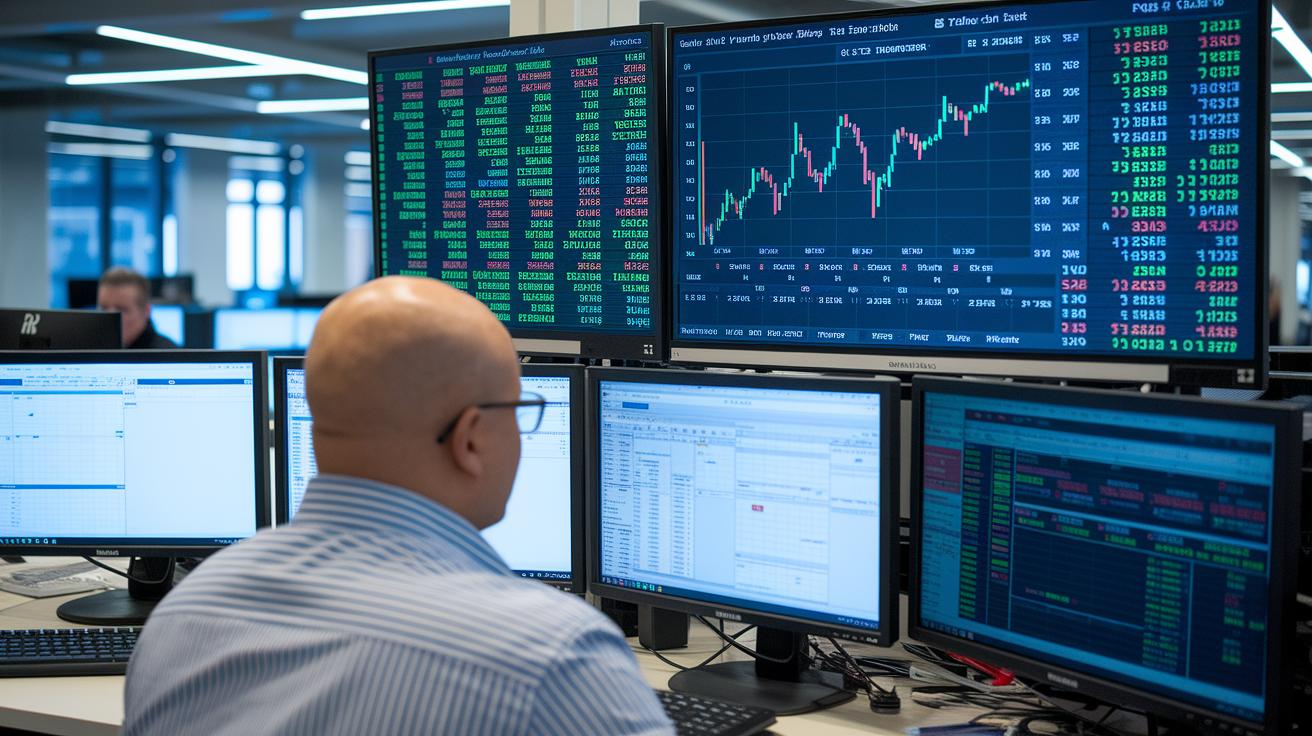
Imagine a big investor making a huge trade worth millions to rebalance their portfolio. They had to check cost details like commission fees and bid-ask spreads while also making sure there were enough shares available. They even looked at the order book to see the total share volume at different prices. One trader put it simply: "It’s like dropping a pebble in a quiet pond, each trade changes the flow of supply and demand." This example shows that a large trade can move market prices if liquidity is low. That’s why keeping an eye on cost, volume, and depth is so important to avoid hidden fees and sudden price changes.
In another case, a high-frequency trading firm used smart algorithms to carry out quick trades and grab tiny pricing gaps. The firm focused on fast execution and quality checks to line up orders perfectly, making it easier to find fair market prices. Every microsecond counted as the algorithm adjusted its strategy based on real-time liquidity data. It was like watching a finely tuned engine in action, where speed and accuracy turned small shifts in the market into smart profits.
These examples offer clear lessons for traders and analysts. A big institutional trade reminds us to look at both obvious transaction fees and the hidden costs from changes in market depth. On the other hand, high-speed trading shows that tracking liquidity in real time and reacting quickly can lead to better market pricing. Together, these case studies highlight why using a mix of market liquidity metrics is key to making smarter, well-informed trading decisions.
Final Words
In the action, this piece unpacked the core components of liquidity, from transaction cost measures to order book depth evaluation. It discussed how explicit and implicit costs factor in and how trading volume and turnover ratios add context.
The analysis then moved into price impact, resilience, and actual case studies showing the dynamics behind these insights. Overall, the discussion provides a clear roadmap to understanding market liquidity metrics and how they can guide smart decision-making in today's financial environment.
FAQ
What does liquidity mean in finance?
Liquidity in finance means how easily an asset can be bought or sold without causing a large change in its price, reflecting lower transaction costs and faster execution.
What are some examples of market liquidity metrics?
Market liquidity metrics examples include measures like bid-ask spreads, trading volume, turnover ratios, and order book depth. These metrics help traders see execution speed and transaction costs.
What are the best market liquidity metrics?
The best market liquidity metrics combine explicit costs such as bid-ask spreads with volume indicators and order book depth to deliver a clear picture of trading efficiency and market resilience.
What are the types of liquidity in trading?
Types of liquidity in trading include cost measures (covering explicit and implicit costs), volume-based indicators (like daily volume and turnover), and depth measures, which assess the available orders in the market.
What is a stock market liquidity chart?
A stock market liquidity chart visually represents key liquidity metrics such as trading volume, turnover ratios, and order book depth, making it easier to gauge market conditions at a glance.
What is a liquidity zone in trading?
A liquidity zone in trading describes a price area with high trading activity where many orders cluster. This often signals support or resistance levels that can influence price movements.
What are the indicators of market liquidity?
Indicators of market liquidity include measures like bid-ask spreads, trading volume, turnover ratios, and order book depth. These help to evaluate how easily assets are traded and how efficiently markets operate.
What is the 7% rule in stocks?
The 7% rule in stocks generally suggests that a 7% price movement can significantly impact liquidity. This guideline helps investors understand potential market shifts, though actual effects may vary by market.
What is a market liquidity metrics PDF?
A market liquidity metrics PDF is a document that explains various liquidity measures. It typically covers examples on costs, trading volume, and order book depth, offering detailed guidance for financial analysis.